-
 Welcome to plumtriA platform for Research & Innovation
 -
 Looking for Funding?Check out the current open calls
 -
 Register today to start receiving our monthly newsletter
 -
 Looking to partner up?Search our list of registered profiles
 -
 You have questions on a particular funding programme?

3D Printing the Future at Marsa Public Abattoir
Image
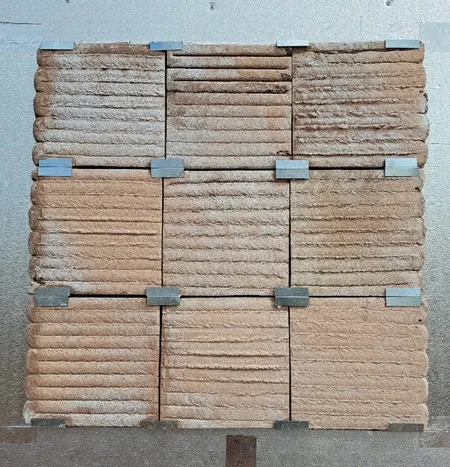
A pioneering step in sustainable construction has been achieved through the SMACORT project, which has successfully demonstrated how advanced 3D printing technology can be
used to produce a low-carbon, thermally efficient 3D-printed façade panel for existing structures. The project’s most visible milestone is the installation of a 3D-printed façade system on an existing structure at the Public Abattoir in Marsa, Malta.
What makes the innovation particularly significant is its environmental sustainability. The façade panels were produced using a cement-free geopolymer mortar made entirely from recycled construction and demolition waste, including crushed concrete and ceramic tiles. Using a gantry-style 3D printer, the material was shaped into modular 40x40 cm panels designed for efficiency and adaptability.
Nine of these modules were assembled into a 1.2 x 1.2-meter test section directly on an industrial building at the Public Abattoir. The panels feature a specially designed reciprocating pattern that improves insulation and helps naturally regulate indoor temperatures, reducing the need for mechanical cooling systems.
The successful transition from laboratory development to real-world application demonstrates that 3D-printed retrofitting is not only feasible but also highly effective for upgrading existing building stock. The project highlights a promising pathway for making Malta’s historic urban environment more energy-efficient while preserving its architectural identity.
SMACORT is funded through the Xjenza Malta–TÜBİTAK 2023 Joint Call for R&I Proposals.
For more information, contact Principal Investigator Prof. Ruben Paul Borg, Faculty for the Built Environment, University of Malta (ruben.p.borg@um.edu.mt)
Attachments: