-
 Welcome to plumtriA platform for Research & Innovation
 -
 Looking for Funding?Check out the current open calls
 -
 Register today to start receiving our monthly newsletter
 -
 Looking to partner up?Search our list of registered profiles
 -
 You have questions on a particular funding programme?

Project HYPER4B Presents Innovative Treatment for Breast Cancer
Image
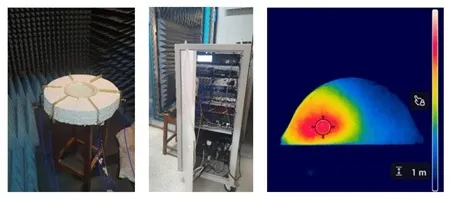
Research indicates that increasing the temperature of tumour tissue can stimulate increased activity within tumour cells, due to a higher blood flow. When a tumour reaches hyperthermic state, the uptake of cancer treatment, such as radiation therapy and chemotherapy, would be greater. Therefore, integrating hyperthermia into a cancer treatment plan would allow medical practitioners to decrease the dosage of these therapies, making the treatment safer and more tolerable for patients.
Normal body temperature is 36 - 37 °C and by using controlled microwave energy, similar to that used in a microwave oven to heat food, it is possible to increase the temperature of specific tissues.
At the Electromagnetics research group within the Department of Physics, researchers are developing a Microwave hyperthermia system as part of a project funded by Xjenza Malta, Hyper4B and also thanks to the support of Evolve Ltd, through their donation of equipment. The system targets a tumour using multiple antennas that focus microwave energy precisely at the tumour site. Through constructive interference a local hot spot in the intended tumour area is created whilst destructive interference allows the remaining healthy tissue to remain at normal temperatures. The localization of the tumour is determined through simulations, which provide the characteristics of the waveform coming out of each antenna.
A crucial contribution to this development has come from Evolve Ltd, who donated a high-end phase shifter as part of their continuous support to the Electromagnetics Research Group. This specialised equipment enables precise control of the microwave signals used to focus energy on the tumour, making it possible to fine-tune the heating pattern and improve treatment accuracy. Thanks to this donation, the team has been able to complete the system assembly and advance to the validation phase of the technology, an essential step towards future clinical translation.
Although the system is in the early stages of development, tests have already shown promising results, with good agreement between simulation and experimental data. Tests are currently being performed on tissue-mimicking solutions, which replicate the thermal and dielectric of human/animal tissues. These materials, developed at the EMRGgives the possibility to safely study how heat distributes within the tissue and refine the technology before moving to clinical applications. Multiple iterations of tests performed demonstrated a stable temperature increase at a predetermined target.
Looking ahead, the HYPER4B team aims to advance this technology through continued testing and refinement. Future efforts will focus on the optimisation of heating times using nanoparticles and further validation in different clinical scenarios.
HYPER4B is financed by Xjenza Malta and the Scientific Technology Research Council (TÜBİTAK), through the Xjenza Malta - TÜBİTAK 2023 Joint Call for R&I projects. This initiative is part of the PRIMA Programme supported by the European Union. Also, the system is funded through an agreement with Evolve Ltd.
Information and image source:
Attachments: