-
 Welcome to plumtriA platform for Research & Innovation
 -
 Looking for Funding?Check out the current open calls
 -
 Register today to start receiving our monthly newsletter
 -
 Looking to partner up?Search our list of registered profiles
 -
 You have questions on a particular funding programme?

Image

As geopolitical competition intensifies, research and innovation are becoming central to economic strength and global influence.
The European Commission presented a new set of measures to strengthen how Europe engages internationally through research and innovation. The initiative aims to reinforce Europe’s global partnerships, while safeguarding its strategic interests, keeping international cooperation open and secure, and enhancing Europe’s attractiveness for talent and innovation worldwide.
Information and image source:
Attachments:
📣 Xjenza Malta is seeking to recruit an Executive (Framework Programme) to support Malta’s participation in the EU’s Horizon Europe Programme. The selected candidate will serve as a National Contact Point (NCP) and Programme Committee Member (PCM), providing guidance to researchers and organisations, promoting EU funding opportunities, supporting stakeholder engagement, and contributing to Malta’s position in international research forums.
🔗To learn more about the role and how to apply, click here: https://lnkd.in/dy65ErEm
Organisation:
Xjenza Malta
Application Deadline:
Wednesday, March 11, 2026
Email address:
recruitment.xjenzamalta@gov.mt,
Further Information:
External Link

Xjenza Malta would like to inform you about the following initiative:
From 14 to 23 July 2026, the Alpbach Summer School invites motivated students to explore space and planetary research. This year’s focus is on “High-energy processes in planetary systems”
Over ten intensive days, participants will work in teams to develop their own satellite mission concept, complemented by lectures from international experts, hands-on project work, and interdisciplinary exchange, all set against the inspiring backdrop of Alpbach, Austria.
The Summer School offers a unique opportunity to gain insights into European space research and acquire valuable experience for scientific and technical careers. It is organized by the FFG – Austrian Research Promotion Agency in collaboration with the ESA and its member states.
Application deadline: 8 March 2026 www.summerschoolalpbach.at
High-energy processes play a fundamental role in shaping the evolution and diversity of planetary systems. From the intense X-ray and extreme ultraviolet radiation emitted by young stars to magnetospheric interactions, stellar winds, and energetic particle precipitation, these mechanisms govern atmospheric escape, influence planetary habitability, and drive complex chemical processes. Understanding them is therefore key not only for interpreting the history of our own solar system, but also for assessing the diversity of exoplanetary systems.
Designing innovative mission concepts to explore high-energy processes in planetary systems offers students the chance to address open questions at the frontier of planetary and exoplanetary science. Which processes dominate atmospheric escape across different planetary types? How does magnetospheric energy input shape planetary environments and potential habitability? And what can exoplanetary observations reveal about the interactions between stars and planets? Tackling these questions will be essential to understand the dynamics, chemistry, and long-term evolution of planetary systems.
Information and image source:
Organisation:
Alpbach Summer School
Application Deadline:
Sunday, March 08, 2026
Email address:
michael.quinton@gov.mt
Further Information:
External Link
EIT Urban Mobility invites innovators from across Europe to submit a proposal to its Strategic Innovation Open Call, designed to accelerate the deployment of impactful solutions that address the most pressing challenges in urban mobility.
The call focuses on supporting ambitious, market-critical projects that tackle clearly defined problems faced by cities, public authorities, and mobility providers. We aim to de-risk development and enable large-scale deployment by backing solutions with a clear path to market and the potential to scale across Europe.
EIT funding allocation
The total estimated funding allocated to this Call is 60 million EUR for the period 2026-2028 and has multiple cut-off dates.
Each project may receive up to 2 million EUR of EIT funding. EIT Urban Mobility will reimburse up to 65% of the eligible project costs, while the minimum co-funding rate for all proposals is 35%.
Through this call, EIT Urban Mobility fosters innovation and strengthens Europe’s competitiveness by encouraging collaboration across the EIT Knowledge Triangle—education, research, and business—alongside a fourth essential partner: cities.
The Call will focus on five sectors in which we believe Europe has the potential to innovate and create impact:
Urban logistics,
Public transport,
Mobility data management,
Electrification of transport and alternative fuels, and
Health and mobility.
In the future, the Call may also include specific topic scopes to address key market opportunities or urgent market failures that can be addressed through our funding.
Who can apply?
This is a multi-beneficiary call for proposals and therefore there must be a minimum of two independent legal entities, working together. These entities must be established in two different European Member States, and/or Third countries associated with Horizon Europe.
For information on special cases, including Switzerland and Hungarian universities please refer to the Call Manual (see ‘List of documents to take into consideration’ section below).
How can you apply?
The Strategic Innovation Open Call is open from 2026-2028 with several cut-off dates as outlined below.
Access the EIT Urban Mobility NetSuite platform and find the call for the currently open cut-off date under Grant Management –> Grant Management – -> Open Calls. Submit your application form within the given deadline.
If you have never registered in NetSuite, please complete the Partner Information Form (PIF). If the system denies your registration because the PIC number corresponds to an already registered entity, or because your email address is associated with an existing entity, please contact servicedesk@eiturbanmobility.eu.
The assessment of the proposals involves two stage: Stage 1 is the expert evaluation of proposals submitted via the EIT Urban Mobility NetSuite platform (see section 4.2 of the Call Manual for submission steps), followed by Stage 2, which includes a panel hearing and selection by the Selection Committee.
Key dates are:
Call opens: 19 June 2025
Info sessions: 1-3 July 2025 (see below section ‘Info Webinars’ for further information)
Deadlines to apply: All submission windows close at 17.00 CET on the published cut-off date.
1st cut-off date: 23 September 2025
2nd cut-off date: 12 February 2026
3rd cut-off date: 18 June 2026
4th cut-off date: February 2027
5th cut-off date: June 2027
Eligibility and admissibility check: Up to 1 week post-submission cut-off
Evaluation and invitation to panel hearings: Up to 6 weeks post-submission cut-off
Panel hearings and portfolio selection: Approximately 2 weeks post invitation to Panel Hearings
Communication of results: Approximately 2 weeks post-Panel Hearings
Start of the projects: Approximately 4 weeks post-communication of results
Organisation:
EIT Urban Mobility
Call Deadline:
Wednesday, June 30, 2027
Further Information:
External Link
Image

On 11 February 2026, the widerAdvance Facility organised the Mutual Learning Event “Unlocking Funding Potential: Leveraging Funding for Knowledge Valorisation” at the Czech Institute of Informatics, Robotics and Cybernetics (CIIRC), Czech Technical University in Prague. The event brought together policymakers, researchers, research managers, project coordinators, and innovation stakeholders to exchange practical insights on how knowledge valorisation and funding synergies can strengthen the long-term impact of research, particularly in Widening countries.
Katarzyna Walczyk-Matuszyk, widerAdvance Facility Coordinator at IPPT PAN, and Ian Gauci Borda from Xjenza Malta opened the event by introducing the services of the widerAdvance Facility and its role in supporting organisations through tailored coaching, training, and capacity building. They emphasised that knowledge valorisation should be embedded throughout the project lifecycle and that strengthening organisational and RMA capacities is essential to increase the maturity and exploitation potential of Key Exploitable Results (KERs).
Building on this perspective, Federica Roffi, Deputy Head of Unit at REA “Widening Participation and Spreading Excellence”, highlighted in her keynote the strategic importance of synergies across EU programmes. She stressed that combining funding instruments is a powerful way to increase impact and ensure continuity beyond a single project, while effective knowledge valorisation attracts additional public and private investment and strengthens Europe’s competitiveness.
The widerAdvance Facility team then presented the widerAdvance approach and tools to reinforcing regional and organisational valorisation systems, illustrating how successful outcomes rely on coordinated capacities across organisations, ecosystems, and policies, with the presentation of the Funding Matrix and the Self-assessment tool.
Concrete examples from practice brought these ideas to life, as Dušan Galusek (FunGlass), Viera Pechancová (Tomas Bata University), Fabio Figurella (DAN Europe Foundation) and Tomáš Mozga (MOLIPEC) shared their success stories in leveraging and combining funding opportunities, providing practical insights and inspiration for participants. The discussion then shifted to policy instruments supporting synergies, with contributions from Alžběta Plachá of the Technology Agency of the Czech Republic, Omar Cutajar from Xjenza Malta, and Piotr Świerczyński of the National Centre for Research and Development.
The event concluded with an interactive session where participants shared their experiences and reflected on opportunities and challenges in leveraging funding synergies and knowledge valorisation.
The widerAdvance Facility will continue to support organisations from Widening countries through training, coaching, and capacity building activities.
Information and image source:
Unlocking Funding Potential: Highlights from the widerAdvance Mutual Learning Event – Xjenza Malta
Attachments:
Type of Partner Sought
Higher education / University
The Department of Industrial and Manufacturing Engineering (DIME) within the Faculty of Engineering, University of Malta, conducts research and training in product development methodologies and technologies, supporting both academia and industry across the full product lifecycle. Its work promotes improvements in quality, cost efficiency, time-to-market, and environmental sustainability to strengthen global competitiveness. We are currently seeking a Polish partner for a joint Research and Innovation (R&I) call under the Malta–Poland MoU on R&I cooperation, aligned with the joint call issued by Xjenza Malta (A2GR scheme) and the National Centre for Research and Development (NCBR, INNOGLOBO programme).
Description of Idea
The proposed call focuses on human-centred industrial exoskeleton research collaboration to improve worker safety, wellbeing, and productivity under the Malta–Poland R&I call. Exoskeletons offer strong potential to improve worker wellbeing by reducing strain during repetitive or physically demanding tasks and helping prevent work-related musculoskeletal disorders, which affect a large proportion of the European workforce. In line with Industry 5.0 principles, the research will investigate technological, ergonomic, and human-centred factors influencing user acceptance and adoption of exoskeletons in industrial settings. The research aims to support safer, more sustainable workplaces by enabling solutions that reduce fatigue, improve efficiency, and enhance safe task performance. The research’s expected achievements span both technical innovation and research advancement. Technical outcomes include the application of empathic, human-centred methods to understand stakeholder needs, alongside iterative co-creative concept development supported by validation and usability testing. Research outcomes include the validation of measurement and analysis approaches for industrial exoskeletons, and the development of taxonomies and frameworks for usage classification, product–service development, and data-driven systems that support standardised application, evaluation, and implementation.
Contact Details
Amy Grech, Department of Industrial and Manufacturing Engineering, University of Malta: amy.grech@um.edu.mt or send an email to international.xjenzamalta@gov.mt for further details.
Call Deadline:
Monday, March 30, 2026
Image
Wild Thyme Honey
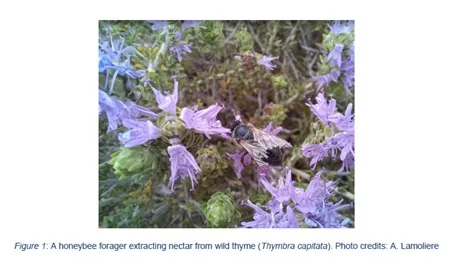
Honey is distinguished according to the plants from which the bees collect their nectar. Mifsud outlines certain traits that visibly distinguish wild thyme honey (għasel tas-sagħtar): unlike most honeys, wild thyme honey ‘tends to remain in the liquid phase’, because one particularity of the thyme flower is that it contains more fructose than glucose. It is ‘the only mono-floral honey that we can produce in Malta’ (Mifsud) – that is, its nectar is primarily drawn from only one floral source. Wild thyme honey is amber in colour and has ‘a strong aromatic flavour’, says Matthew Calleja.
Maltese wild thyme honey has received international recognition, having been awarded gold at the 2021 London International Honey Awards.
Where and when does it grow?
There are three honey flows in Malta’s seasonal cycle of honey production. The spring multi-floral honey is collected by beekeepers at the end of May, with the nectar coming from different floral sources such as citrus, red clover, borage, different thistles, among others. Wild thyme shrubs flower from the end of May through June, and typically grow wild in open garrigue habitats found mostly in the northern parts of Malta, some areas in Gozo, and on Comino. Wild thyme honey is therefore also known as ‘summer honey’. This is followed by the ‘autumn honey’, in which period bees typically collect nectar from the eucalyptus trees and carob trees, producing honey that is ‘dark brown-black in colour’ (Mifsud). It is generally collected by beekeepers at the end of October to mid-November. Each of these honeys has a distinctive taste and colour.
Read full article attached below:
Attachments: External Link
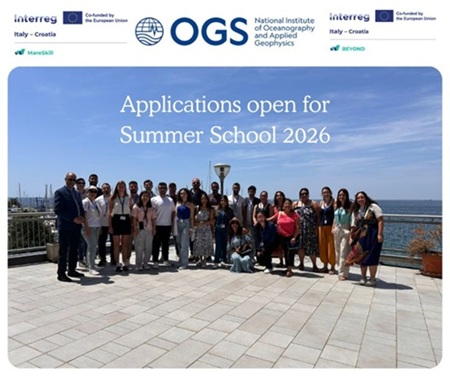
Xjenza Malta is pleased to announce a unique training opportunity for young researchers and professionals in the Euro-Mediterranean region: the Blue Skills OGS Summer School 2026 on “Building Capacities for an Innovative and Resilient Sustainable Blue Economy”. Organised within the framework of the 5+5 Dialogue on Research, Innovation and Higher Education, the programme supports scientific exchange, regional cooperation and offers specialised training on marine ecology, Marine Protected Areas (MPAs), and the ecological dimensions of offshore wind energy.
📅 Dates: 15–19 June 2026
📍 Location: Trieste, Italy
⏰ Application deadline: 6 March 2026, 23:59 CET
🧑🎓Target candidates: Open to master’s students/graduates and PhD candidates/holders from the Euro-Mediterranean region with at least B2 English and a strong interest in the Mediterranean, the sustainable blue economy, sustainable energy security and marine resources.
💶 Up to 35 participants will receive funding. For full information on what is covered, please consult the programme details.
Information and image source:
Organisation:
National Institute of Oceanography and Applied Geophysics
Application Deadline:
Friday, March 06, 2026
Email address:
see below link
Further Information:
External Link
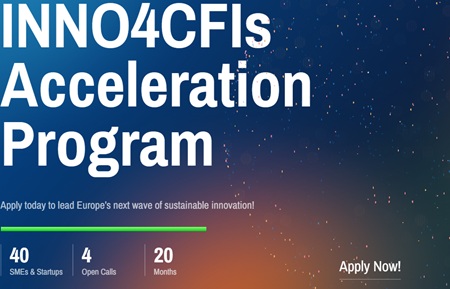
The EU-funded project INNO4CFIs just launched its fourth open call for the Acceleration Program: Empowering Carbon Farming & Climate Pioneers, a unique 3-month program designed to help innovative SMEs and start-ups advance and scale their green-tech and carbon farming solutions and impact.
The programme is open to all initiatives from all EU Member States.
Benefit from mentoring and workshops
Get market validation and visibility
Be one the first to join the Interregional Market Uptake Hub for matchmaking opportunities and market uptake
Showcase opportunities for Investor readiness and Demo Day
Information and image source:
Find out more at the INNO4CFIs Acceleration Program page
Organisation:
F6S
Call Deadline:
Thursday, March 12, 2026
Further Information:
External Link
Image
The European Commission launched BE READY, a new European Partnership for pandemic preparedness. Through BE READY, the European Union will strengthen its capacity to anticipate, prevent and respond rapidly to epidemics and pandemics. BE READY focuses on advancing research on emerging and re-emerging pathogens and accelerating the development of diagnostics, treatments and vaccines.
Ekaterina Zaharieva, European Commissioner for Startups, Research and Innovation, said:
“Europe’s pandemic preparedness must be built on sound scientific foundations. That is why we are making €120 million from the Horizon Europe budget available for the BE READY partnership. Through BE READY, we are putting our citizens’ health first while reinforcing Europe’s innovation leadership.”
This call is accessible through the A2P scheme, where Malta-based entities are eligible for up to €300,000 per proposal.
Information and image source:
Attachments: Subscribe to