-
 Welcome to plumtriA platform for Research & Innovation
-
 Register today to start receiving our monthly newsletter
-
 Looking for Funding?Check out the current open calls
-
 Looking to partner up?Search our list of registered profiles
-
 You have questions on a particular funding programme?

Image

📣 PRIMA is proud to announce the launch of the PRIMA Young Innovators Award 2026, a new recognition prize celebrating the creativity, leadership, and determination of young innovators from Southern Mediterranean countries who are shaping a more sustainable future for the region.
🔑 Why this Award matters
The Mediterranean faces urgent challenges: water scarcity, climate stress, food insecurity, and ecosystem degradation. Young people across the region are already responding with innovative solutions, from water-saving technologies and resilient farming practices to community-driven initiatives that strengthen livelihoods and social inclusion.
The PRIMA Young Innovators Award recognizes these changemakers. It celebrates youth who have personally led or significantly contributed to solutions aligned with PRIMA’s mission, and it encourages the leadership, initiative, and problem-solving capacity needed to address the region’s sustainability challenges.
🔬 What we’re looking for
The Award seeks young innovators who have conceived, developed, or implemented solutions that:
- Address key Mediterranean challenges in sustainable agriculture, water management, resilient food systems, or responsible use of natural resources
- Demonstrate relevance to local contexts and respond to real societal, environmental, and economic needs
- Show measurable or credible expected impacts on environmental sustainability, livelihoods, or social inclusion
- Have potential for replication, scalability, and youth empowerment, including inspiring and mentoring other young innovators, with particular attention to women innovators
💰 The Prize
Two equivalent recognition prizes of EUR 10,000 each will be awarded to the two highest-ranked eligible applications following a transparent evaluation by an independent panel of experts.
↪️ Who Can Apply
The Award is open to natural persons aged 18–35 who are nationals and residents of one of the PRIMA Participating States bordering the Mediterranean Sea: Algeria, Egypt, Israel, Jordan, Lebanon, Morocco, Tunisia, or Türkiye.
Applicants may submit individually or as a group, provided all applicants meet the eligibility criteria. The Award is addressed exclusively to individuals, applications based on affiliation with or representation of companies or organizations are not eligible.
Information and image source
Attachments:
Image
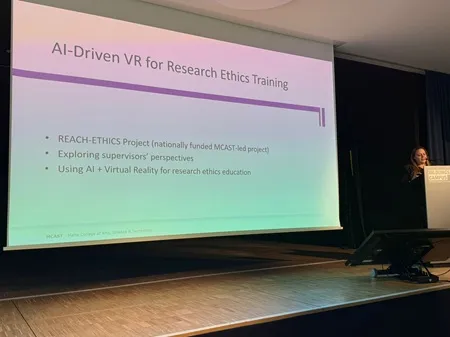
Montalto, M., Bonnici West, L., Scerri, D., Gatt, A., Deguara, D., Debono, D., Galea Vella, M., Theuma, L., Delicata, F. and Gauci, S.A.
🛞 The REACH-ETHICS project, led by the Malta College of Arts, Science and Technology (MCAST), introduces an innovative approach to research ethics education through the integration of artificial intelligence (AI) and virtual reality (VR). The project aims to transform how students and researchers engage with ethical principles by moving beyond traditional, theory-heavy instruction toward immersive, scenario-based learning. The system employs AI-powered “expert” avatars within virtual environments to simulate real-life ethical dilemmas in healthcare and animal research contexts. Through interactive dialogue, users can explore key issues such as informed consent, confidentiality, and participant welfare in a more applied and reflective manner. This approach fosters active engagement, critical thinking, and experiential learning, thereby making ethics education more accessible, practical, and meaningful. Ultimately, the project seeks to enhance ethical awareness and decision-making while supporting educators through innovative teaching tools.
🔉 This work was presented by Dr Shirley Ann Gauci at the DHBW AI Transfer Congress on 24th April 2026 in Heilbronn, Germany, where the focus was on the evaluation of the AI-driven VR avatar prototype from the perspective of research supervisors. The study adopted a qualitative focus group design, complemented by quantitative evaluation. Supervisors from health and animal studies interacted with the avatar by posing ethics-related questions and assessing its responses across four key dimensions: relevance, correctness, completeness, and clarity.
🔬 Findings suggest that the REACH-ETHICS prototype has strong potential as a supplementary tool, rather than a replacement, for traditional research supervision and ethics teaching. Overall, the project, as presented at DHBW AI Transfer Congress, demonstrates the promise of combining AI and VR to create engaging, scalable, and pedagogically robust ethics training environments, contributing to the ongoing modernization of research ethics education.
💰 Project REACH-ETHICS is financed by Xjenza Malta through the FUSION: R&I Research Excellence Programme under grant agreement number REP-2024-006.
Attachments:
Image
Dr. Frederick Lia and Karen Attard
Closed-loop hydrocarbon extraction is an efficient and selective technique for recovering non-polar compounds from complex matrices, with growing relevance in olive mill waste (OMW) valorisation. Hydrocarbons, composed solely of carbon and hydrogen, range from simple alkanes to complex aromatic structures and are widely used in industrial applications due to their chemical stability [1].
Traditional separation methods such as cryogenic distillation and open solvent extraction suffer from high energy demand, solvent loss, and environmental impact [2]. Closed-loop systems overcome these limitations by operating under sealed, pressurised conditions that enable full solvent recovery. Liquefied hydrocarbons such as n-butane and n-propane selectively dissolve lipophilic compounds, while continuous recirculation enhances mass transfer and reduces emissions, aligning with green chemistry principles [3,4].
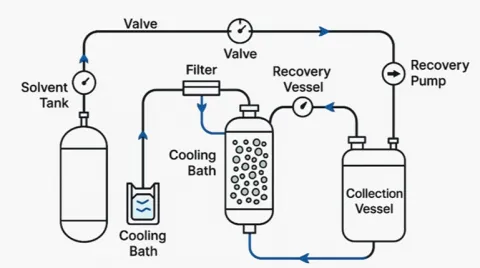
These systems consist of integrated components including a solvent tank, extraction column, collection vessel, recovery pump, and vacuum system. Under subcritical conditions, compounds such as lipids, waxes, and terpenes are extracted, and solvent removal occurs under mild thermal or vacuum conditions due to low boiling points, preserving thermolabile compounds and improving product quality [4].
Applications include petroleum recovery (e.g., VAPEX), supercritical extraction of hydrocarbons from sludges, and analytical workflows requiring containment of volatile compounds [3,5,6]. However, in OMW research, focus has largely remained on polyphenol recovery via membranes or liquid–liquid extraction [7]. The hydrocarbon-based recovery of lipophilic fractions remains underexplored despite its potential.
Key advantages include high efficiency, solvent recyclability, reduced energy consumption, and improved extract quality. Limitations include safety concerns due to flammability, reduced efficiency for heavier fractions, and challenges in scale-up [8,9].
Overall, closed-loop hydrocarbon extraction represents a promising yet underutilised approach for integrated OMW valorisation, supporting circular bioeconomy strategies through combined recovery of polar and non-polar fractions.
Funding
Funding Project ‘A Complete Sustainable Route For The Utilization Of Olive Pomance: Production Of Bioactive Spurt Inhibtors And Alternative Proteins - SustainOlive’ financed by Xjenza Malta -TÜBİTAK Joint Call for R&I Proposals, 2024 Call.
References
1. Ponce-Espinosa, H., Ponce-Cruz, P. & Molina, A., 2013. Artificial Hydrocarbon Networks. In: Artificial Organic Networks: Artificial Intelligence Based on Carbon Networks. Studies in Computational Intelligence, Vol. 521. Springer, pp. 73–111. DOI: 10.1007/978-3-642-37844- 1_4
2. Yang, L., Qian, S., Wang, X., Cui, X., Chen, B. & Xing, H., 2020. Energy-efficient separation alternatives: metal–organic frameworks and membranes for hydrocarbon separation. Chemical Society Reviews, 49(15), pp.5359–5406. https://doi.org/10.1039/D0CS00289A
3. Butler, R.M. & Mokrys, I.J., 1998. Closed-loop extraction method for the recovery of heavy oils and bitumens underlain by aquifers: The VAPEX process. Journal of Canadian Petroleum Technology, 37(4). DOI: 10.2118/98-04-04
4. Wu, Y., Wei, S. & Xi, J., 2025. Liquefied petroleum gas extraction: an innovative, green, and sustainable approach for extracting natural lipophilic compounds. Comprehensive Reviews in Food Science and Food Safety, 24(9), e70258. https://doi.org/10.1111/1541-4337.70258
5. Ávila-Chávez, M.A., Eustaquio-Rincón, R., Reza, J. & Trejo, A., 2007. Extraction of hydrocarbons from crude oil tank bottom sludges using supercritical ethane. Energy Sources, Part A: Recovery, Utilization, and Environmental Effects, 29(23), pp.2327–2345. DOI: 10.1080/01496390701446449
6. Lucke, R.B., Campbell, J.A., Ross, G.A., Goheen, S.C. & Hoppe, E.W., 1993. Closed-system, solid-phase extraction cleanup method for removal of normal paraffin hydrocarbon from samples prior to purge-and-trap volatile analysis. Analytical Chemistry, 65(17), pp.2420– 2424. DOI: 10.1021/ac00065a024
7. Tapia-Quirós, P., Montenegro-Landívar, M.F., Reig, M., Vecino, X., Saurina, J., Granados, M. and Cortina, J.L., 2022. Integration of membrane processes for the recovery and separation of polyphenols from winery and olive mill wastes using green solvent-based processing. Journal of Environmental Management, 307, 114555. https://doi.org/10.1016/j.jenvman.2022.114555
8. Monin, J.C., Barth, D., Perrut, M., Espitalié, M. & Durand, B., 1988. Extraction of hydrocarbons from sedimentary rocks by supercritical carbon dioxide. Organic Geochemistry, 13(4–6), pp.1079–1086. DOI: 10.1016/0146-6380(88)90292-6
9. Song, Y., Furtos, A., Fuoco, D., Boumghar, Y. & Patience, G.S., 2022. Meta-analysis and review of cannabinoids extraction and purification techniques. The Canadian Journal of Chemical Engineering, 101(6), pp.3108–3131. https://doi.org/10.1002/cjce.24786
Attachments:
Image

Building on its digital infrastructure, the second phase of the SOLEATECH project—developed in collaboration with Bahçeşehir University (Türkiye) and funded under the bilateral call PRIMA Xjenza Malta–TÜBİTAK 2023—focuses on transforming raw data into actionable insights through Artificial Intelligence. By integrating advanced analytics into a Decision Support System, the project empowers farmers to make precise, timely decisions.
Two core AI models drive this innovation. A Long Short-Term Memory (LSTM) model forecasts soil water potential, enabling proactive irrigation planning. In parallel, an Artificial Neural Network (ANN) evaluates environmental variables to predict olive quality, categorizing outputs into four performance levels. To enhance accuracy and scalability, techniques such as Principal Component Analysis reduce data complexity while maintaining predictive power.
To bridge the gap between technology and practice, the system incorporates a Multi-Criteria Decision-Making framework. This approach combines AI output with agronomic expertise, identifying irrigation strategy as the most critical factor for productivity.
The expected impact is significant: a 20% increase in productivity alongside a 20% reduction in water use and operational costs. Beyond efficiency, SOLEATECH supports knowledge transfer and policy development, contributing to the long-term sustainability of Mediterranean olive farming.
Information and image source:
Attachments:
Image
TRANSCAN-4 pre‑announces the First Joint Transnational Call (JTC 2026) on the topic of:
"Translational Research on Cancer Metabolism: Multidisciplinary Approaches for Diagnosis and Treatment"
TRANSCAN-4, in continuity of the preceding ERA-NET TRANSCAN-3, has the goal of coordinating national and regional funding programmes for research in the area of translational cancer research. The specific challenge is to promote a transnational collaborative approach between scientific teams in demanding areas of translational cancer research to ensure a more efficient use of available resources (e.g. data, infrastructures) and ultimately to produce results of higher quality and impact.
🧮The TRANSCAN-4 JTC-2026 will be implemented through a two-stage submission procedure: pre-proposals and full proposals.
📢The call is planned to be formally launched on 20 May 2026
⌛Submission deadline for pre-proposals in 21 July 2026.
🏁It is expected that consortia invited to the full-proposal stage will be asked to submit their proposal in 13 January 2027.
Xjenza Malta is one of the TRANSCAN-4 funding organisations participating in the JTC-2026.
Information and image source:
Attachments:
Image
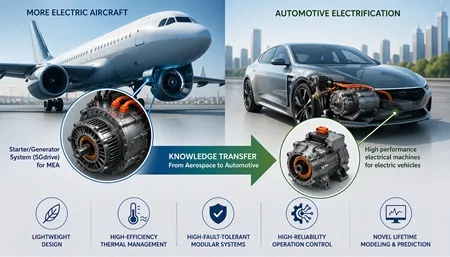
In January 2024, the Department of Electrical Engineering of the University of Malta, started work on the project SGdrive, funded by Xjenza Malta. The project’s full title is High Reliability and High Power Density Starter/Generator System for MEA (SGdrive) and is headed by Prof Inġ Michael Galea. The project aimed to address technical challenges in designing starter-generator systems for More Electric Aircraft (MEA). Key technical achievements include lightweight design, high-efficiency thermal management, modular high-fault-tolerant systems, and high-reliability operation control strategies. The University of Malta's focus lies in novel lifetime modeling and prediction techniques, contributing to advancements in aviation electrification technologies.
Beyond its technical achievements, the SGdrive project has also delivered an important and perhaps less visible impact: the transfer of knowledge across industries. Although the project focused on electrical machine design for aerospace applications, many of the insights gained have proven highly relevant to other sectors, most notably automotive electrification.
Engineers and researchers involved in SGdrive were able to apply lessons learned from designing high-performance starter-generator systems for aircraft to the development of electrical machines for automotive use. Challenges such as achieving high power density, managing heat effectively, and ensuring long-term reliability under demanding conditions are shared across both fields. By leveraging advanced modelling techniques and reliability-focused design approaches developed at the University of Malta, the team was able to inform and improve the design of an automotive electrical machine, as later presented in a peer-review publication (DOI 10.1109/ICEM60801.2024.10700291).
This cross-sector knowledge transfer highlights how innovation in one field can accelerate progress in another. In particular, it shows how cutting-edge aerospace research can contribute to the advancement of cleaner and more efficient road transport technologies. The SGdrive project therefore not only advances the state of the art in aviation systems, but also supports broader efforts towards electrification and sustainability in the automotive industry.
For more information, please contact the principal investigator Prof Inġ M. Galea on michael.d.galea@um.edu.mt or the Department of Electrical Engineering on ele.eng@um.edu.mt.
Attachments:
Image
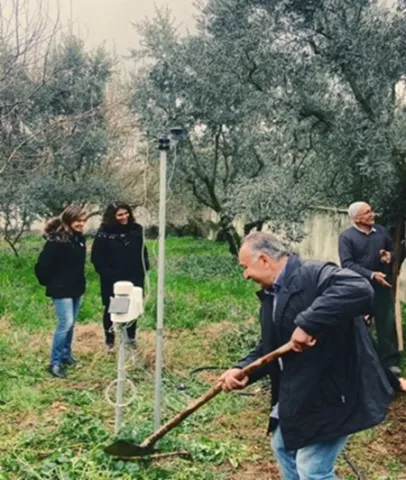
For centuries, olive cultivation has been rooted in tradition. Today, however, climate change is disrupting this balance, with heatwaves and water scarcity threatening both yield and quality. In response, the SOLEATECH project - developed by WES TRADE LTD (Malta) and Bahçeşehir University (Türkiye) under the bilateral call PRIMA Xjenza Malta- TÜBİTAK 2023 - is introducing a new paradigm: data-driven olive farming.
The first phase of the project focused on establishing a “Digital Twin” of olive orchards through the deployment of advanced IoT infrastructure. Using the IRRIGOPTIMAL platform, solar-powered Smart Nodes equipped with soil moisture, nutrient, and weather sensors were installed across pilot sites in Malta and Türkiye. This system enabled continuous, real-time monitoring of hyper-local environmental conditions.
A key scientific breakthrough emerged from this phase: the identification of the “Microclimate Gap.” Data analysis showed that regional weather models can overestimate orchard temperatures up to 8°C. This discrepancy can lead to inefficient irrigation decisions and unnecessary stress on crops.
By validating the importance of localized data, SOLEATECH demonstrated that precision agriculture must rely on field-level intelligence rather than generalized forecasts. This foundational phase sets the stage for advanced analytics and AI-driven decision-making in modern olive farming.
Information and image source:
Attachments:
The Horizon project JARVIS has just launched its Open Call 2 to support innovators developing advanced human-robot interaction solutions. This initiative offers funding and support for startups, SMEs, research organisations, industry actors, and public organisations to develop, test, and validate new technologies within the JARVIS ecosystem.
- Apply via F6S:
- Track 1, Co-Development: Apply here until 1 June 2026, 17:00 CET
Track 2, External Pilots: Apply here until 10 July 2026, 17:00 CET
- Track 1 Co-Development: For 2 tech organisations (startups/SMEs) developing new modular HRI technologies and collaborative robotics components within the JARVIS framework. Up to €100,000 per project.
Track 2 External Pilots: For 2-3 partner consortia testing JARVIS technologies in real use cases. Consortia should include a technology developer/integrator and a use-case provider, with an optional third technical partner. Up to €130,000 per project.
Information and image source:
Organisation:
Jarvis
Application Deadline:
Wednesday, July 01, 2026
Email address:
alba@f6s.com
Further Information:
External Link
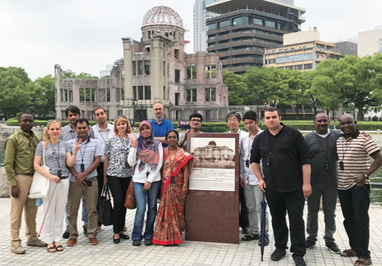
The Matsumae International Foundation (MIF) is offering a prestigious, fully funded research fellowship for non-Japanese researchers. This opportunity allows post-doctoral researchers to conduct research at a Japanese host institution in any field, with preference being however given to research proposals in the fields of natural sciences, engineering, medicine and agriculture. Successful applicants will have the opportunity to carry out research in Japan for a maximum of six months anytime in the period between June 2027 and March 2028.
Eligibility Criteria
Non-Japanese nationality and alignment with MIF’s core values
Ph.D. (Doctorate) holder at the time of application
45 years old or younger (born in or after 1981)
Secured acceptance from a host institution in Japan before applying
Proficient in either English or Japanese
No prior long-term stays in Japan (except for short-term visits like conferences or tourism)
Currently employed in the home country and committed to returning after the fellowship
Fellowship Benefits
Monthly Allowance: JPY 220,000 for research and living expenses
Arrival Fund: JPY 120,000 for initial costs
Round-Trip Airfare: Economy class from home country to Japan
Insurance: Comprehensive overseas travel insurance
Study Tour: Cultural and academic enrichment program in Japan
How to Apply
Applications must be submitted via email to application@mif-japan.org.
Application Period: 1st – 30th June 2026 (Japan Standard Time)
Late or incomplete applications will not be considered.
Information and image source:
Organisation:
Matsumae International Foundation (MIF)
Application Deadline:
Tuesday, June 30, 2026
Email address:
application@mif-japan.org
Further Information:
External Link
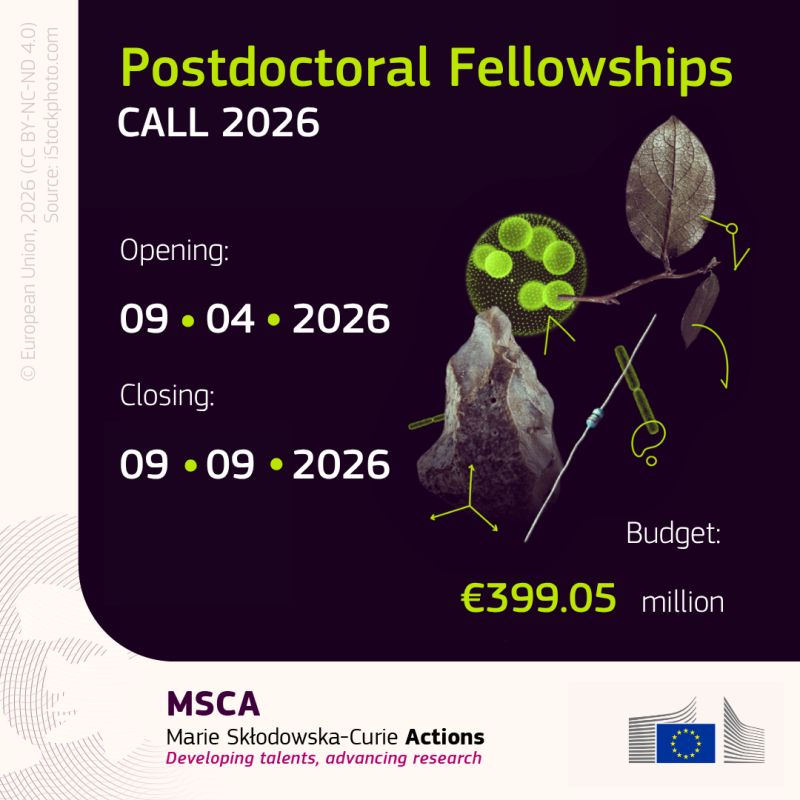
With a budget of €399.05 million, the European Commission will support nearly 1,600 researchers to acquire new skills, develop their careers, and gain international, interdisciplinary and inter-sectoral experience by working in another country.
There are two types of fellowships:
🔵 European Fellowships – open to researchers of any nationality to carry out a personalised project in the EU or countries associated to Horizon Europe for up to 24 months
🔵 Global Fellowships – open to EU and Horizon Europe associated countries nationals or long-term residents wishing to work with organisations in third countries for a period of 12 to 24 months, before returning to Europe for 12 months
🔗 Deadline for applications is 9 September 2026, 17:00 CEST.
In 2026, the Marie Skłodowska-Curie Actions (MSCA) marks 30 years of supporting research excellence and researcher mobility across Europe and beyond.
➡️ Join the celebrations and explore what’s next: link.europa.eu/DbH4Dy
Information and image source:
Organisation:
European Commission
Application Deadline:
Wednesday, September 09, 2026
Email address:
paula.pinho@ec.europa.eu
Further Information:
External Link