-
 Welcome to plumtriA platform for Research & Innovation
-
 Register today to start receiving our monthly newsletter
-
 Looking for Funding?Check out the current open calls
-
 Looking to partner up?Search our list of registered profiles
-
 You have questions on a particular funding programme?

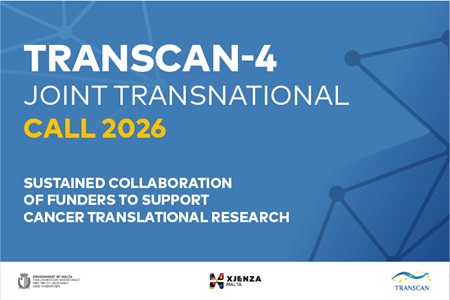
Sustained collaboration of national and regional cancer funders to support the Cancer Mission through translational research (TRANSCAN-4), bringing together 19 organisations from 15 countries, launched a Joint Transnational Call 2026 on the topic of Translational Research on Cancer Metabolism: Multidisciplinary Approaches for Diagnosis and Treatment.
Xjenza Malta is proud to participate as an official partner in this initiative, enabling Malta-based researchers, clinicians, and organisations to contribute to cutting-edge translational research on cancer metabolism. Eligible projects may access up to €300,000 in funding per project.
Eligibility criteria
To be eligible, applicants must:
Comply with the National Rules for Participation;
Be a Malta-based entity, including private and public entities, RKDOs, and other organisations with an operating base in Malta, in accordance with State Aid or Non-State Aid national rules;
Complete and submit a National Application Form and Budget Breakdown Form, duly signed and accompanied by the required annexes.
Key Dates
Deadline for submission of pre-proposal: 21 July 2026, 12:00 CET by the Project Coordinator via TRANSCAN-4 Electronic Submission Tool.
Deadline for submission of National Application Form and Annexes: 21 July 2026, 23:59 CET via email to eusubmissions.xjenzamalta@gov.mt
To familiarise interested applicants with this funding opportunity and answer any questions, Xjenza Malta is organising an information session on 4 June 2026, 10:00-11:00 CET.
Register for the information session here.
Information and image source;
Organisation:
TRANSCAN-4
Call Deadline:
Tuesday, July 21, 2026
Further Information:
External Link
Image
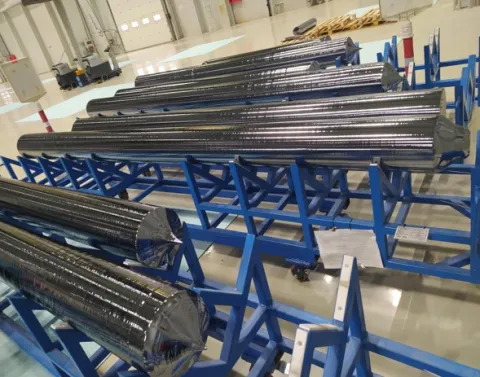
The SLICE (SiLicon for Improved Cell Efficiency) project aims to improve the quality of silicon crystals used in solar cells in order to increase solar panel efficiency and manufacturing yield. Since bulk silicon is used in more than 90% of solar cells, even small efficiency gains can have a major global impact. For example, a 0.5% improvement in solar panel efficiency could provide an additional 4 GW of global energy capacity, enough to power up to two million homes. While recent efficiency improvements have mainly resulted from better manufacturing methods and purer materials, defects formed during silicon crystal growth are still known to reduce solar cell performance.
The project investigates how these grown-in defects form and evolve in commercial gallium-doped silicon crystals and evaluates their effect on advanced solar cells. Researchers are studying wafers taken from different regions of silicon crystals with varying oxygen concentrations and growth conditions, while also engineering silicon samples with controlled defect densities and sizes.
The collaboration brings together the University of Malta, led by Prof. Luciano Mule’ Stagno and Dr Inġ. Marija Demicoli, the Middle East Technical University – Centre for Solar Energy Research and Applications (ODTÜ-GÜNAM), led by Dr Bülent Arikan, and industrial partner KalyonPV, led by Ms Ece Çamkara. The work is funded through the Xjenza Malta-TÜBİTAK 2024 Joint Call for R&I Proposals.
KalyonPV has successfully produced the gallium-doped silicon crystals used in the study, while the University of Malta is currently performing defect analysis using infrared light scattering tomography. Simultaneously, research work at ODTÜ-GÜNAM is focusing on fabricating high-efficiency PERC and TOPCon solar cells to directly link material defects with device performance.
Attachments:
Image
The European Commission has announced plans for a new European Ocean Act aimed at strengthening ocean governance and supporting the sustainable development of the blue economy across Europe. The proposal also focuses on improving maritime spatial planning, the process of organising how marine areas are used for activities such as shipping, fishing, offshore energy and environmental protection.
The proposal forms part of the wider European Ocean Pact, which seeks to create a more coordinated approach to the management of Europe’s seas. It also aims to improve marine protection, strengthen ocean observation systems and reduce fragmentation between existing EU marine policies.
A public consultation on the proposal is currently open until 16 July 2026, with the Commission inviting feedback from governments, researchers, maritime industries, coastal communities and citizens across the European Union. More information about the consultation and how to participate is available through the European Commission’s consultation portal.
The growing importance of maritime spatial planning and sustainable marine management is acknowledged by projects such as MEDSEAPLAN, a three-year initiative launched in 2024 and financed through the Sustainable Blue Economy Partnership. The project focuses on sustainable marine planning and the blue economy, a term used to describe economic activities linked to oceans and seas, ranging from traditional sectors such as fisheries and shipping to emerging industries including offshore renewable energy and marine biotechnology.
Led by the World Ocean Council, the project brings together 16 partners from eight countries: France, Turkey, Spain, Malta, Italy, Cyprus, the Netherlands and Germany. The consortium is working to improve marine data collection, support ecosystem-based maritime spatial planning and develop future planning scenarios for the Mediterranean region through research, digital monitoring tools and cross-border collaboration.
MCAST is representing Malta in the MEDSEAPLAN project and is leading the initiative’s Ocean Literacy activities, which focus on increasing public understanding of maritime spatial planning, sustainability and marine governance. The work includes educational and outreach initiatives aimed at helping students, researchers and the wider public better understand how decisions about the sea can affect industries, coastal communities and the marine environment.
The project also prioritises stakeholder engagement, bringing together maritime industries, researchers, policymakers and national authorities through interviews, workshops and collaborative meetings. These collaborations are intended to improve transparency, strengthen cooperation and support more informed decision-making on the future management of Mediterranean marine areas.
With the European Commission planning to adopt the legislative proposal for the European Ocean Act by the end of 2026, projects such as MEDSEAPLAN are expected to play an increasingly important role as Mediterranean countries face increasing pressure linked to shipping activity, tourism, fisheries, coastal development and climate change. Recent storms and extreme weather events across the region have further highlighted the need for coordinated
marine planning, stronger environmental management and long-term cooperation between governments, researchers and maritime industries.
Project MEDSEAPLAN is financed by Xjenza Malta through the Sustainable Blue Economy Partnership that is supported by the European Union through Horizon Europe.



Attachments:
Image
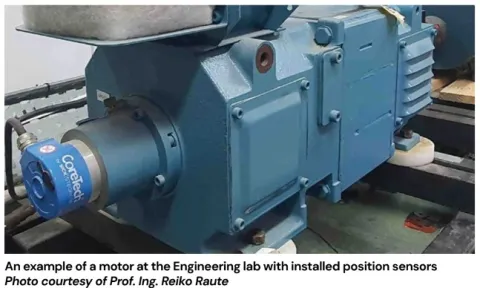
Author: Christian Keszthely
Modern alternating-current motors have an awkward dependency: the drive control system must always know the rotor's position. That tiny fact – a position, measured again and again – decides whether a car glides off the line or shudders, whether a crane holds steady or lurches. It matters far more than it sounds n electric cars, trains, cranes, and aircraft, the rotor inside the motor has to stay in sync with the electrical currents that power it. If the timing is off, the motor can stutter, shake, or stop working. To prevent this,
most modern electric motor drive systems use position sensors. ‘It is a very important device. But it is also the weak link,’ says Prof. Ing. Reiko Raute, Associate Professor of Electrical Engineering at the University of Malta and Principal Investigator for the project ‘Permanent Magnet Synchronous Motor Design for Position Sensorless Drives (SensorlessPMSM)’. Position sensors report the rotor’s location to the controller thousands of times per second. They help motors run smoothly and reliably, but they also add cost and complexity, and make the system more fragile. ‘In a small motor, sometimes the motor itself is cheaper than the sensor,’ Raute explains. ‘And when something breaks, it is often the sensor that breaks first.’ Raute’s research asks a simple question: Can we design a motor that does not need a sensor, since we can figure out its position from its behaviour?
WHY MOTORS NEED TO ‘KNOW THEMSELVES’
Think of pushing someone on a swing while blindfolded. If you cannot tell where the swing is, you might push at the wrong time or in the wrong direction. The swing slows down or moves unpredictably. Electric motors face a similar challenge. Modern motors – especially permanent magnet synchronous motors (PMSMs) used in electric vehicles – run on carefully timed alternating currents. These currents must always align with the position of the rotor’s magnets. ‘The phase of the voltage we apply is always aligned with the magnets,’ Raute says. ‘Otherwise, the motor will not work very well.’ This alignment is not optional. It happens continuously, often more than 2,000 times per second. The controller reads the rotor’s position, calculates the correct current, applies
it and repeats – over and over again. That’s the job of position sensors. They work like a GPS for the motor, always reporting the rotor’s location. But what if we could read the rotor’s position another way?
THE COST OF KNOWING TOO MUCH
Position sensors are precise, but like any mechanical part, they wear out and can fail over time. ‘They are fine mechanical systems with small cables,’ Raute explains. ‘They can break more easily than the motor itself.’ A sensor might cost a car maker
about €50, but replacing it can cost the owner hundreds. Across millions of cars, this becomes a big expense. In safety-critical systems – like electric aircraft or high-speed trains – the stakes are even higher. ‘They often use double encoders,’ Raute notes, ‘because this is a functional safety device.’ More parts mean more potential points of failure. More wiring adds weight. More maintenance leads to more downtime. If we could remove the sensor and still have reliable control, it would represent a substantial shift.
THE PROMISE – AND LIMITS – OF SENSORLESS CONTROL
Engineers know that motors emit useful signals as they run. When a motor spins, it creates voltages and currents that indicate what is happening inside. At medium and high speeds, these signals are clear, and back-EMF methods are common. Back-EMF is the small voltage a spinning motor generates in opposition to the power driving it – effectively, it is the motor talking back to its controller. ‘When the motor rotates fast enough, this problem is solved,’ Raute says. ‘You can buy many motor controllers with sensorless control.’ The problem arises at low speeds, especially when the motor is stopped. At zero speed, there’s no back-EMF, since it only appears when the motor is turning. But this is when control matters most – like starting a car on a hill, moving aircraft wing flaps, or lifting with a crane. At low speeds, engineers look at another signal: inductance.
READING THE MOTOR’S FINGERPRINTS
Inductance changes as the rotor moves because of the motor’s shape and materials. Steel, magnets, and air all affect the magnetic fields inside. In theory, these changes can be measured, and the rotor’s position estimated, even when it is not moving. But in practice, every motor is different, and the signal is complex ‘The signal that you see is sometimes very weird and difficult to understand,’ he explains. ‘And this signal depends on the motor design.’ For years, researchers have tried to build better algorithms to read these signals. Raute worked on this during his Ph.D. research more than 20 years ago. ‘We put intelligence into the inverter,’ he says. ‘We could see clear signals, but sometimes they did not make sense.’ Over time, it seemed the issue might not be with the algorithms, but with the signals from the motor itself.
TURNING THE PROBLEM INSIDE OUT
Most research tries to get better information from existing motors. Raute’s team asks a different question: what if we designed the motor to give clearer signals? ‘Up to now, people always worked with off-the-shelf motors,’ he explains. ‘But most motors give very weird signals at some point.’ Modern simulation tools make this possible. Using finite-element software, Raute’s team builds detailed virtual motors, including the steel, magnets, and windings, and studies their behaviour. ‘Fifty years ago, this was not really
possible,’ he says. ‘Now we can really see how the motor behaves.’ The simulations show that even small changes in magnet
placement, shape or steel geometry can make the inductance signal much clearer – or much more erratic. ‘It may be very simple to arrange the magnets a little bit differently,’ Raute says, ‘so that sensorless control works much better at very low speeds.’
A NEEDLE IN A MAGNETIC HAYSTACK
Designing motors is already a trade-off. Engineers have to balance efficiency, size, torque, cost and material availability. Rare-earth magnets are strong, but they are expensive and difficult to source. These are permanent magnets manufactured from alloys of rare-earth elements – primarily neodymium (NdFeB) or samarium-cobalt (SmCo) – which belong to the lanthanide series
of the periodic table and enable exceptionally high magnetic energy density relative to their size. ‘Manufacturers try to get the
highest efficiency, the smallest size, and maybe even get rid of some permanent magnet material,’ Raute explains. Making the motor easier to read without sensors adds another challenge. ‘There are endless possibilities,’ he says. ‘The size, the shape, and the location of the magnets – they change everything.’ Right now, the research is a mix of science and trial-and-error. ‘We are still a bit in a trial-and-error phase,’ Raute admits. ‘We try many different designs and see what effect they have.’ The team examines factors such as current effects, magnetic saturation, and steel geometry, and studies how they interact. Artificial intelligence may help search through all these design options in the future. But first, the fundamentals need to be understood. ‘AI needs to be rained on something,’ Raute notes. ‘And no one has done this before.’
WHY ZERO SPEED MATTERS
Most people do not think about zero-speed control until something goes wrong. ‘A motor usually starts from zero speed,’ Raute says. ‘And in this state, you want to know the rotor position very well.’ If the controller does not know the rotor’s position, it might send the wrong current. The motor can jerk, shake or act unpredictably. That is why cars use encoders to sense position. ‘As soon as you turn on the electronics, it knows where the rotor is,’ Raute explains. If sensorless control worked well at zero speed, many systems could be simpler. Cranes and lifts could hold loads more safely. Aircraft could use lighter electric systems instead of hydraulics on wing flaps. ‘The piping system of hydraulics is very heavy,’ Raute says. ‘The cables of a motor are lighter.’
FEWER PARTS, FEWER FAILURES
Reliability might be even more important than cost savings. ‘Motors themselves are very strong,’ Raute says. ‘Big copper windings, big bearings.’ But sensors are fragile. ‘If you can remove the encoder,’ he explains, ‘you reduce maintenance, space and failure points.’ And because PMSMs are already the preferred choice for electric vehicles and aircraft – thanks to their efficiency and power-to-weight ratio – improving their robustness has an outsized impact. ‘If you have some intellectual property on how to design the motor cleverly,’ Raute says, ‘this would be worth a lot of money.’
WHERE THE RESEARCH STANDS
The project is still in progress, and the research team continues to move at a steady pace. ‘We hope at least to have a good software model by the end of April,’ Raute says. A hardware prototype might come later, but simulations are not perfect yet. Still, the goal is clear. Instead of making algorithms work harder to read noisy signals, the team wants to redesign the motor to produce a
cleaner signal. As Raute says: ‘We try to design a motor that gives us a clean signal that we can really use.’ If motors can be designed to reveal their position through their own physics, one of electrification’s most persistent dependencies simply falls away.
Project ‘Permanent Magnet Synchronous Motor Design for Position Sensorless Drives (SensorlessPMSM)’ is financed by the Xjenza Malta for and on behalf of the Foundation for Science and Technology, through the FUSION: R&I Research Excellence Programme.
Information and image source:
Attachments:
Following the “From research to business: Turning knowledge into jobs, innovation and growth” conference held in Malta on 13–15 October 2025, organised by the Union for the Mediterranean (UfM) in partnership with Xjenza Malta, the Research to Business (R2B) Programme is now open for applications.
The R2B Programme is a regional initiative supporting research teams across the Mediterranean to transform scientific knowledge into market‑ready, commercially viable innovations. It is initiated by the UfM, in partnership with the Spanish Agency for International Development Cooperation (AECID), aligned with the UfM R&I Agenda and the 2022 UfM R&I Ministerial Declaration, and implemented by Berytech in collaboration with ANIMA Investment Network and the University of Barcelona.
R2B offers:
Structured commercialisation support
Mentoring and expert guidance
Regional visibility
Access to a regional network of industry, investors, and innovation stakeholders
The programme is open to applied research teams developing projects with a clear application or proof of concept that address regional challenges and demonstrate strong commercialisation potential.
Eligibility: Applicant teams (with at least one core founder) must originate from countries eligible under the Spanish Cooperation’s Masar Programme: Egypt, Jordan, Lebanon, Morocco, Palestine, Tunisia, Mauritania, Algeria, and Syria.
Researchers are encouraged to apply, and stakeholders are invited to share this opportunity within their networks to help build a cross‑Mediterranean innovation community driving real‑world impact.
Information and image source:
🔗 More information and application: [https://berytech.org/programs/ufm-research-to-business/]
Organisation:
Union for the Mediterranean (UFM)
Application Deadline:
Monday, June 01, 2026
Email address:
rayan.chaaban@berytech.org
Further Information:
External Link
Image
A pioneering step in sustainable construction has been achieved through the SMACORT project, which has successfully demonstrated how advanced 3D printing technology can be
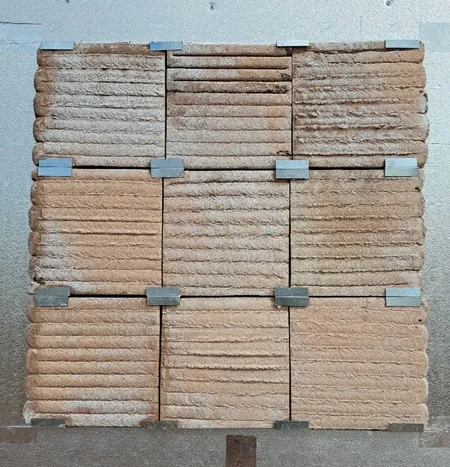
used to produce a low-carbon, thermally efficient 3D-printed façade panel for existing structures. The project’s most visible milestone is the installation of a 3D-printed façade system on an existing structure at the Public Abattoir in Marsa, Malta.
What makes the innovation particularly significant is its environmental sustainability. The façade panels were produced using a cement-free geopolymer mortar made entirely from recycled construction and demolition waste, including crushed concrete and ceramic tiles. Using a gantry-style 3D printer, the material was shaped into modular 40x40 cm panels designed for efficiency and adaptability.
Nine of these modules were assembled into a 1.2 x 1.2-meter test section directly on an industrial building at the Public Abattoir. The panels feature a specially designed reciprocating pattern that improves insulation and helps naturally regulate indoor temperatures, reducing the need for mechanical cooling systems.
The successful transition from laboratory development to real-world application demonstrates that 3D-printed retrofitting is not only feasible but also highly effective for upgrading existing building stock. The project highlights a promising pathway for making Malta’s historic urban environment more energy-efficient while preserving its architectural identity.
SMACORT is funded through the Xjenza Malta–TÜBİTAK 2023 Joint Call for R&I Proposals.
For more information, contact Principal Investigator Prof. Ruben Paul Borg, Faculty for the Built Environment, University of Malta (ruben.p.borg@um.edu.mt)
Attachments:
Image
The Management Committee of the OFF-SOURCE COST Action (CA21112) is delighted to announce its final conference. This event is the main dissemination hub for our network, uniting leading researchers, industry professionals, policymakers, and early-career investigators to share the latest advancements in the study of Offshore Freshened Groundwater (OFG). Together, we will foster new collaborations, explore the culmination of four years of work, and chart the future for this promising unconventional water resource. We look forward to you joining us to shape the next chapter in OFG research and application.
The primary objective of the RESCUE project is to build knowledge of deep-coastal and offshore low salinity aquifers in European coastal areas, to evaluate novel water resources and to help secure a steady supply of water to both population and industry in times of hydroclimatic extremes.
Objectives
This conference seeks to:
- Disseminate of the key findings and outcomes of the OFF-SOURCE COST Action
- Connect a diverse community of scientists, engineers, water managers, and policymakers.
- Expand the OFG network by fostering collaboration between academic and non-academic partners.
- Define future research priorities and pathways for the sustainable use of OFG resources.
Themes
The scientific program is organized around four key themes reflecting the OFF-SOURCE Working Groups.
Mapping and Characterizing Global OFG Systems
Exploring the fundamental understanding of OFG through data compilation, literature synthesis, and database development. Contributions highlighting the extent, volume, and hydrogeological context of OFG bodies in Europe and beyond are welcome.
Innovative Methods and Technologies for OFG Exploration
Presenting cutting-edge tools for OFG detection and analysis, including geophysical surveys, geochemical methods, hydrogeological modelling, and integrated interpretation of multidisciplinary datasets.
From Resource to Reality: Utilization, Economics, and Feasibility
Bridging science and application by examining the technological, economic, and practical feasibility of OFG as a potable water source. Case studies, industry collaborations, and economic models are encouraged.
Sustainable Management and Governance of OFG Resources
Addressing environmental, legal, and policy challenges for long-term OFG sustainability. Topics include responsible abstraction, environmental impacts, and governance frameworks.
Information and image source:
Attachments: External Link
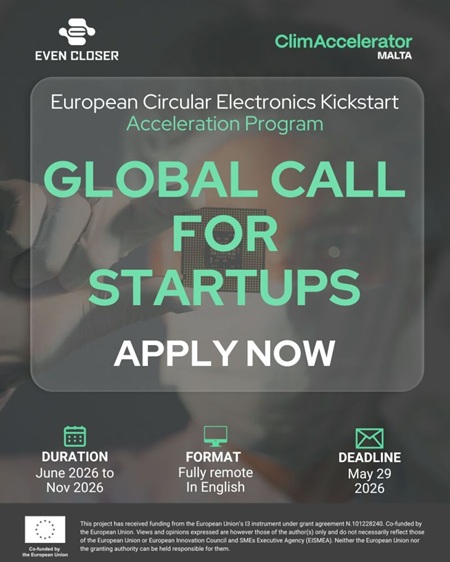
♻️Join the European Circular Electronics Kickstart (ECEK) Acceleration Program and let’s forge together Europe’s Circular Value Chain for Semiconductors ♻️
You will access:
- 1:1 tailored mentoring to support all areas of your business needs
- MVP piloting with industry partners
- Equity investors and public funding
- Strategic R&D and business development partnerships
- Demo Days and post-program support
✍🏼Who should apply?
We welcome startups world-wide, incorporated from 2019 onwards, TRL 4-8, developing solutions addressing the following challenges:
- Electronics recycling, recovery and remanufacturing.
- Innovative technologies for critical raw materials recovery.
- Photovoltaic recycling solutions and semiconductors extraction.
- Upscale electronics and semiconductors industry circularity and
sustainability.
- Smart manufacturing of electronics and semiconductors.
- New technologies to improve industry’s productivity, efficiencies
and competitiveness.
⌛ Duration: June to Nov 2026
💻 Format: Fully remote / online (English)
📅 Apply by: May 29, 2026
Download the brochure
👉 Turn electronic waste into critical raw materials, scale your venture and boost European Semiconductors Circular Value Chain!
The program is free of charge and equity free. This project is co-funded by the European Union’s I3 instrument under grant agreement N.101228240. Views and opinions expressed are however those of the author(s) only and do not necessarily reflect those of the European Union or EISMEA. Neither the European Union nor the granting authority can be held responsible for them.
Information and image source:
Call Deadline:
Friday, May 29, 2026
Further Information:
External Link
Scheme / Call Title
AI-Enabled Digital Twin for Assessing Mediterranean Agro-Food System Resilience under Energy Price Volatility and Supply Chain Disruptions
Type of Partner Sought
Research Institution
The proposed project is designed to fit the objectives of the TÜBİTAK–Xjenza Malta Joint Call by developing a scientifically rigorous and technologically innovative bilateral research project between Türkiye and Malta. The project addresses a critical challenge for Mediterranean societies: “How agro-food systems can remain resilient under increasing exposure to energy price volatility, input dependency, logistics disruptions, and global supply chain uncertainty?”.
The proposal is positioned at the intersection of Artificial Intelligence, digital transformation, sustainable agro-food systems, and resilience-oriented policy analysis. It aims to develop an AI-enabled Digital Twin framework capable of representing, simulating, and assessing the behavior of Mediterranean agro-food systems under external shocks. The project directly contributes to bilateral cooperation by combining the Turkish team’s expertise in AI, system modeling, and resilience analysis with the expected Maltese partner’s expertise in Mediterranean agro-food systems, local data access, agricultural sustainability, and policy-relevant validation.
The project is not conceived as a conventional farm-level smart agriculture or IoT-based decision-support system. Instead, it focuses on the system-level resilience of agro-food systems by integrating production, input, energy, market, logistics, and policy layers into a dynamic Digital Twin environment. This makes the project relevant to both research excellence and practical decision-making for small and medium-scale Mediterranean food systems.
Mediterranean agro-food systems are increasingly exposed to interconnected shocks arising from energy market instability, rising input costs, logistics bottlenecks, import dependency, and supply chain disruptions. These pressures affect not only farm production but also input availability, production costs, market prices, transportation, food affordability, and policy response capacity. International policy analyses increasingly emphasize that food systems must become more resilient to shocks such as climate change, economic disruption, conflict, and supply chain instability.
This project proposes the development of an AI-enabled Digital Twin for assessing and simulating the resilience of Mediterranean agro-food systems under two major stressors: energy price volatility and supply chain disruptions. The Digital Twin will integrate multi-source data, AI-based predictive models, scenario simulation, and resilience indicators to evaluate how agro-food systems respond to single and compound shocks.
The project will use a comparative Mediterranean perspective involving Türkiye and Malta. Türkiye provides a large, diversified Mediterranean agricultural context, while Malta represents a small-scale, island-based and import-sensitive agro-food system. The Turkish case study will focus on Antalya as a Mediterranean agro-food region characterized by intensive agricultural production, greenhouse systems, strong exposure to energy costs, and climatic similarities with Malta, making it a suitable comparative case for cross-country resilience analysis. This comparison will allow the project to examine how system size, input dependency, supply chain structure, and policy capacity influence resilience outcomes under similar external shocks.
The final outputs will include a conceptual and computational Digital Twin framework, a resilience assessment model, scenario-based vulnerability analysis, policy recommendations, and joint scientific publications. The project is expected to contribute to the scientific literature on agro-food resilience, Digital Twin applications, AI-based scenario modeling, and Mediterranean sustainability transitions.
Description of Idea
Recent research on food system resilience has made important progress in identifying vulnerabilities related to trade dependency, input access, price volatility, climate stress, and logistics disruptions. However, much of this literature remains focused on diagnostic or policy-level analysis rather than dynamic simulation.
In parallel, Digital Twin research has rapidly expanded in agriculture and food supply chains. Recent reviews show that Digital Twins can improve regional food supply chains by supporting decision-making, resource efficiency, traceability, logistics management, and resilience to disruptions (Subeesh & Chauhan, 2026; Zhang et al., 2025; Roman et al., 2025; Monteiro & Barata, 2025). However, the field remains fragmented. Existing studies often focus on specific farms, production operations, or supply chain segments rather than modeling the agro-food system as an integrated socio-technical system.
A second gap concerns the limited integration of energy shocks into Digital Twin models of agro-food systems. Although energy prices strongly influence fertilizer costs, irrigation costs, greenhouse production, transport, and storage (OECD, 2023; OECD, 2024b; OECD, 2024c), most agricultural Digital Twin studies do not explicitly model energy price volatility as a systemic shock.
A third gap concerns the limited use of comparative Mediterranean case studies. Recent Mediterranean food-system studies emphasize resilience, water–energy–food nexus interactions, regional cooperation, and sustainable food-system transformation. However, existing comparative Mediterranean studies remain largely policy-oriented, nexus-oriented, or sector-specific (Drobinski et al., 2025; Lovec, 2023; Dernini & Capone, 2024). This gap is particularly evident for comparative small-island and larger Mediterranean production systems such as Malta and Antalya. They offer a scientifically valuable contrast: Malta is a small, import-sensitive island system, while Türkiye provides a larger and more diversified Mediterranean agricultural system. Comparing these two contexts can reveal how system structure, scale, dependency, and policy capacity shape resilience outcomes.
Therefore, the scientific gap can be summarized as follows:
Existing studies have examined agro-food resilience, supply chain disruptions, agricultural digitalization, and Digital Twin technologies separately. However, there remains a lack of AI-enabled, system-level Digital Twin frameworks capable of simulating Mediterranean agro-food system resilience under combined energy price volatility and supply chain disruption scenarios.
The overall aim of the project is to develop an AI-enabled Digital Twin framework for assessing and simulating the resilience of Mediterranean agro-food systems under energy price volatility and supply chain disruptions.
Specific Objectives
1. To define and operationalize the Mediterranean agro-food system as an integrated production–input–energy–market–logistics–policy system.
2. To identify measurable resilience indicators related to stability, robustness, adaptability, vulnerability, and recovery capacity.
3. To collect and harmonize multi-source datasets from Türkiye and Malta, including production, energy, input, market, trade, logistics, and policy-related variables.
4. To develop AI-based predictive models for estimating the response of key agro-food system variables to energy and supply chain shocks.
5. To construct a Digital Twin simulation environment that integrates AI predictions, scenario parameters, resilience indicators, and system-level feedback mechanisms.
6. To simulate single and compound shock scenarios, including energy price shocks, supply chain disruptions, input availability constraints, and policy intervention scenarios.
7. To compare resilience dynamics between Türkiye and Malta and identify context-specific vulnerabilities, adaptation options, and policy implications.
8. To generate scientific outputs and policy-relevant recommendations for strengthening agro-food system resilience in Mediterranean regions.
Contact Details
Dr.Seyed-Sajad Ahmadpour - Seyed.ahmadpour@atlas.edu.tr
Istanbul Atlas University
Call Deadline:
Saturday, June 20, 2026
Image
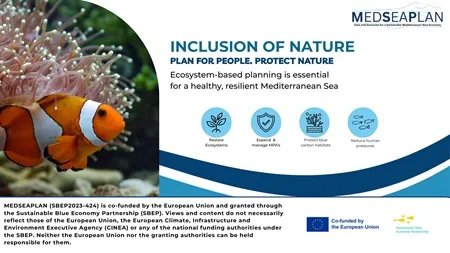
🌿Protecting the Mediterranean means more than drawing lines on a map.
The Mediterranean is one of the world’s richest marine ecosystems — but also one of its most pressured. From tourism and shipping to fisheries and coastal development, human activities continue to place increasing strain on marine habitats already affected by climate change.
Yet nature protection remains one of the weakest areas of Maritime Spatial Planning (MSP) implementation across the region.
Key challenges identified include:
⚠️ Limited ecosystem restoration actions
⚠️ Insufficient Marine Protected Area networks
⚠️ Weak protection of blue carbon ecosystems like Posidonia seagrass meadows
⚠️ Lack of clear measures to reduce environmental pressures at sea
There are still important signs of progress.
-France has mapped Posidonia oceanica ecosystems along its Mediterranean coast — a major step in protecting valuable carbon-storing habitats.
-Spain designated Natura 2000 sites as “Priority Zones for Biodiversity Protection” to help support EU conservation targets.
-Slovenia strengthened environmental assessments by considering cumulative impacts and land-sea interactions in its planning process.
Healthy marine ecosystems are not separate from economic development — they support fisheries, tourism, coastal resilience, biodiversity, and long-term sustainability across the Mediterranean.
As pressures on the region continue to grow, ecosystem-based Maritime Spatial Planning will be essential for ensuring that ocean development works with nature, not against it.
Information and image source:
📊 Source: WWF (2023), Maritime Spatial Planning in the Mediterranean Sea
Attachments: Subscribe to