-
 Welcome to plumtriA platform for Research & Innovation
-
 Register today to start receiving our monthly newsletter
-
 Looking for Funding?Check out the current open calls
-
 Looking to partner up?Search our list of registered profiles
-
 You have questions on a particular funding programme?

Image

The bioeconomy delivers sustainable solutions based on biological resources. These solutions benefit sectors ranging from primary production to value chains of food, health, materials and energy. The EU-funded bioeconomy innovations presented in this booklet show the bioeconomy’s role in fostering circularity, adapting to and mitigating climate change, reducing reliance on fossil fuels and decreasing pollutants. They create jobs and income opportunities, particularly for farmers and foresters, and support a greener, more resilient future. The bioeconomy is the living proof that competitiveness, climate action, environmental protection and citizens’ wellbeing go hand in hand.
Visit the below link to read the booklet.
Information and image source:
Attachments:
Image
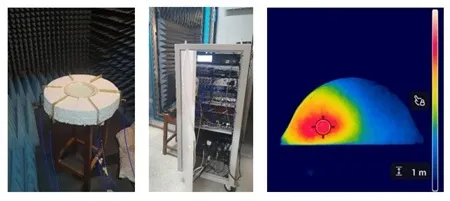
Research indicates that increasing the temperature of tumour tissue can stimulate increased activity within tumour cells, due to a higher blood flow. When a tumour reaches hyperthermic state, the uptake of cancer treatment, such as radiation therapy and chemotherapy, would be greater. Therefore, integrating hyperthermia into a cancer treatment plan would allow medical practitioners to decrease the dosage of these therapies, making the treatment safer and more tolerable for patients.
Normal body temperature is 36 - 37 °C and by using controlled microwave energy, similar to that used in a microwave oven to heat food, it is possible to increase the temperature of specific tissues.
At the Electromagnetics research group within the Department of Physics, researchers are developing a Microwave hyperthermia system as part of a project funded by Xjenza Malta, Hyper4B and also thanks to the support of Evolve Ltd, through their donation of equipment. The system targets a tumour using multiple antennas that focus microwave energy precisely at the tumour site. Through constructive interference a local hot spot in the intended tumour area is created whilst destructive interference allows the remaining healthy tissue to remain at normal temperatures. The localization of the tumour is determined through simulations, which provide the characteristics of the waveform coming out of each antenna.
A crucial contribution to this development has come from Evolve Ltd, who donated a high-end phase shifter as part of their continuous support to the Electromagnetics Research Group. This specialised equipment enables precise control of the microwave signals used to focus energy on the tumour, making it possible to fine-tune the heating pattern and improve treatment accuracy. Thanks to this donation, the team has been able to complete the system assembly and advance to the validation phase of the technology, an essential step towards future clinical translation.
Although the system is in the early stages of development, tests have already shown promising results, with good agreement between simulation and experimental data. Tests are currently being performed on tissue-mimicking solutions, which replicate the thermal and dielectric of human/animal tissues. These materials, developed at the EMRGgives the possibility to safely study how heat distributes within the tissue and refine the technology before moving to clinical applications. Multiple iterations of tests performed demonstrated a stable temperature increase at a predetermined target.
Looking ahead, the HYPER4B team aims to advance this technology through continued testing and refinement. Future efforts will focus on the optimisation of heating times using nanoparticles and further validation in different clinical scenarios.
HYPER4B is financed by Xjenza Malta and the Scientific Technology Research Council (TÜBİTAK), through the Xjenza Malta - TÜBİTAK 2023 Joint Call for R&I projects. This initiative is part of the PRIMA Programme supported by the European Union. Also, the system is funded through an agreement with Evolve Ltd.
Information and image source:
Attachments:

“Treatments and Adherence to Treatment Protocols”
About the Partnership
The European Partnership on One Health Antimicrobial Resistance (EUP OHAMR) unites 53 organisations from 30 countries across Europe and beyond. By adopting a One Health approach, the partnership recognises that the health of humans, animals, plants, and the environment are deeply interconnected. Together, participating countries are investing in collaborative research to develop effective, sustainable solutions to combat AMR.
EUP OHAMR First Joint Transnational Call 2026
The Partnership launched its First Joint Transnational Call focusing on “Treatments and Adherence to Treatment Protocols.”
This call marks the beginning of a multi-annual effort to accelerate research and innovation that addresses the global challenge of antimicrobial resistance (AMR). Future calls will focus on strengthening surveillance systems, advancing infection prevention and control, encouraging prudent antimicrobial use, and building overall capacity to tackle AMR across all sectors.
National Participation
Xjenza Malta is proud to participate as one of the Research Funding Organisations launching this first Call. Malta-based entities are eligible for funding of up to €500,000 per project to join international consortia addressing one of the following priority topics:
- Topic 1: Identify and develop new combination treatments using existing or innovative antimicrobials or antimicrobial with adjunctive treatments to extend drug efficacy and combat resistance
- Topic 2: Develop tools and methods to improve adherence to treatment protocols (engagement of end-users is mandatory)
- Topic 3: Assess the impact of antimicrobials for veterinary and agricultural use on the risk of AMR transmission to humans and the environment to inform policies on the restriction of some antimicrobials for human use.
Visit the below link to download call guidelines and application forms.
Information and image source:
Organisation:
Xjenza Malta
Call Deadline:
Monday, February 02, 2026
Further Information:
External Link

Transforming Health and Care Systems (THCS) Partnership is a multilateral strategic initiative under Horizon Europe, aimed at fostering the transition towards more sustainable, efficient, resilient, inclusive, innovative and high-quality people-centred health and care systems equally accessible to all.
Xjenza Malta together with other Research Funding Organisations from 26 countries, has launched the 4th Joint Transnational Call to financially support R&I projects. Entities based in Malta are eligible to apply for up to €500,000 in funding, enabling them to join a consortium and submit a proposal for this Call (N.B. if multiple national partners are included in a single consortium, the total funding for all Maltese participants combined cannot exceed the €500,000 cap).
This Call for proposals, entitled “Access of Care”, aims to fund research and innovation projects that contribute to ensuring equitable access to and utilisation of health and care services. Through the funded research and innovation projects, policy and decision makers should gain the knowledge and tools necessary to implement the reallocation of resources as the health and care system undergoes a transition to meet new and ongoing challenges.
Projects funded under this call will build on existing evidence to deliver innovative solutions that enable key stakeholders to reduce inequalities in access to and utilisation of health and care services. Projects will address how to improve access to all levels of health and care through financial models, models for delivering health and care services and setting up of interdisciplinary integrated care programmes.
Visit the below link to download the guidelines and application forms.
Announcements
THCS Secretariat JTC 2026 Information Webinar (online) on 10 December 2025, 14:00-16:00 (CET) – Click here to register
Xjenza Malta’s THCS Online Info Session on 12 December 2025, 11:00 – 12:00 (CET) – Click here to register
Information and image source:
Organisation:
Xjenza Malta
Call Deadline:
Monday, February 02, 2026
Further Information:
External Link
Image

Do not miss to revisit these webinars organised by GOOS. For marine scientists, enthusiasts, educators, students, researchers and persons involved in marine observations, this series of GOOS webinars shares knowledge and presents innovative approaches for biodiversity monitoring, and a coordinated and standardised marine biology and ecosystem data collection and management system. The sessions provide an introduction to each BioEco EOV and their importance for monitoring biodiversity, enabling ecological forecasting, and supporting science, management and decision making.
The last two webinars delivered this month were:
Benthic invertebrates abundance and distribution | Sea turtles abundance and distribution
and
Seabirds abundance and distribution | Marine mammal abundance and distribution
Click here to view the all webinar recordings.
For further info on GOOS, contact Prof. Aldo Drago, GOOS Focal Point for Malta (aldo.drago@gov.mt).
Information and image source:
Attachments:
The Algae Accelerator is a six-month mentorship programme designed to support startups and SMEs in the algae value chain to upscale their business strategies. The initiative aims to introduce new, sustainable alternatives to the market, addressing some of the algae sector's key challenges by boosting the development and uptake of innovative algae-based products.
Register to the online information session, scheduled for 27 November 2025 from 11:00am to 12:00pm CET
Call application deadline: 4 December 2025, 17:00 CET
Information source:
Organisation:
AlgaeProBANOS
Call Deadline:
Thursday, December 04, 2025
Further Information:
External Link
Image

The NOSTER & Science Microbiome Prize has been established to reward innovative research by young investigators working on the functional attributes of the microbiota of any organism that has potential to contribute to our understanding of human or veterinary health and disease or to guide therapeutic interventions.
Grand Prize winner receives:
Each Grand Prize winner will be awarded a cash prize in the amount of US$25,000 and travel and accommodation for the prize ceremony.
The Grand Prize winner will also receive a free five (5) year digital subscription to Science, and will have their winning essay published in Science (print and online).
Runner(s) Up receives:
Each Runner up will receive an award plaque and travel and accommodation for the prize ceremony.
The Runner(s) Up will also receive a free one (1) year digital subscription to Science, and will have their winning essay published in Science online. Maximum number of Runners Up is 2.
All federal, state and local taxes, and any other costs and expenses, associated with the receipt or use of the prize are the sole responsibility of the winner.
Submission deadline: 14 February 2026
Click on the below link to read further.
Information and image source:
Attachments:
Image

The INNO4CFIs Acceleration Program is calling on innovative Green tech SMEs and startups from selected European regions to foster their market uptake and validate their technologies! This Acceleration program offers equity-free support to 40 promising solutions/initiatives demonstrating strong market potential and a minimum technological readiness level (TRL of 6).
Participants will benefit from a 4-month tailored acceleration program, designed to refine their market and technology validation strategies and advance their solutions (up to TRL 9). Expert guidance will ensure compliance with Circular Economy and Regulatory Compliance Standards (CRCS) and the European Carbon Removal Certification Framework.
INNO4CFIs Acceleration Program is now accepting applications, through the third Open Call process, providing a unique opportunity for up to 15 eligible SMEs and startups to join this transformative journey. Throughout the last 10 months, 2 other Open Calls have been launched to select up to 40 initiatives to enrol and benefit from this Acceleration Program.
Application deadline: 24 November 2025 at 17:00 CET
Visit the below link to view the guidelines.
Information and image source:
Attachments:

JPI Oceans Joint Transnational Call 2025 on Blue Carbon Ecosystems is now officially open, aiming to support research that addresses critical knowledge gaps in the understanding and management of blue carbon ecosystems. It focuses on advancing scientific insight into the processes that govern carbon sequestration and greenhouse gas fluxes in these ecosystems, and on generating evidence to inform effective policy and management responses.
National Participation
Xjenza Malta is proud to participate as one of the Research Funding Organisations launching this Call. Malta-based entities are eligible for funding of up to €150,000 per project to join international consortia addressing one (or more) of the following priority topics:
Carbon stocks and fluxes at local and regional scales
Blue carbon ecosystems’ resilience and vulnerability
Effectiveness and scalability of restoration and protection measures
For further information kindly download the application guidelines and forms from the below link.
Full Proposal submission deadline – 2 March 2026, 14:00 CET
We are more than pleased to arrange one-on-one meetings to explore and discuss this funding opportunity in greater detail, kindly contact eusubmissions.xjenzamalta@gov.mt
* If more than one National partner is present in one consortium, the total amount of funding for the participating National partners cannot exceed the €150,000 capping.
Information and image source:
Organisation:
Xjenza Malta
Call Deadline:
Monday, March 02, 2026
Further Information:
External Link
Image
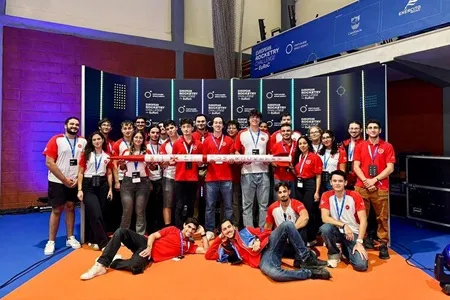
The University of Malta’s Rocketry team is the first Maltese team to enrol in the European Rocketry Challenge (EuRoC). The competition, held in Portugal, hosted 29 teams, drawn from universities across Europe.
Their challenge is to launch their rocket to three or nine kilometres, depending on the category.
Led by co-founder Ryan Grech, Malta’s team spent about six months getting the completely student-made rocket ready for the competition.
Being the team’s first attempt at this competition, they were up against heavyweight teams established decades ago with budgets amounting to over €100,000.
The Maltese team had to compete as novices with a conservative budget of €4,000, the smallest budget of all the teams.
The day before they were supposed to head off for the competition, the team carried out a static fire test on the rocket motor to evaluate its performance before the competition. Things did not go to plan, and the team experienced a catastrophic failure at launch.
“In other words, the entire motor exploded and the case launched approximately 250 metres in the air,” Grech said.
The team then contemplated calling off the trip, but they chose to go anyway and attempt to build a new motor. This meant that, in the space of two days, they had to source parts in a foreign country, design a new motor and build it.
“We decided to split into three teams to make this work. A few people got into the van we rented and drove around different villages and eventually to Lisbon to source parts. A few others were tasked with speaking to other teams and asking for help. While around 20 of us remained at the Airbnb designing a new engine,” he said.
Through sheer determination, help from other teams and a bit of luck, the team were able to build a new motor.
“The officials approved it [for a static fire test] but gave the motor a 10 per cent chance of success,” he said, adding they only had enough time and resources to carry out a static launch test.
‘We thought it exploded again’
The time to carry out the static fire test arrived and the motor was set up in a concrete test stand to hold it in place.
The team stood at a safe distance, and as the launch began, the motor took off and “punched through 300kg of concrete”.
“We saw the motor fly out of the stand and land about 600 metres away. We thought it exploded again,” Grech said.
Despite their concerns, the motor appeared to be still intact. It was the stand that failed.
“It passed the review, so we could theoretically have launched the rocket. Unfortunately, we did not have enough time or resources. The motor was only single-use,” he said.
Malta’s team placed eighth out of 29 for the team award.
This project was supported by Xjenza Malta.
Information and image source:
Attachments: Subscribe to