-
 Welcome to plumtriA platform for Research & Innovation
-
 Register today to start receiving our monthly newsletter
-
 Looking for Funding?Check out the current open calls
-
 Looking to partner up?Search our list of registered profiles
-
 You have questions on a particular funding programme?


Visit the below link to view the 21 funding opportunities under Cascade Funding, an instrument by the European Commission.
Please note that these calls have different deadlines within the month of November 2025.
Information and image source:
Call Deadline:
Sunday, November 30, 2025
Further Information:
External Link
Image

What if our youngest learners grew up with a holistic understanding of the sea and its environment? Supporting Early chiLdhood education in Blue skills with generative artificial Intelligence (SELBI) is a nationally-funded research project at the Malta College of Arts, Science and Technology (MCAST) designed to help make that possible. Its ambitious purpose is to equip Early Childhood Education and Care (ECEC) educators with the knowledge, tools and professional confidence to teach young children about the marine environment, sustainable living and the ethical use of natural resources, supported by trustworthy artificial intelligence. This work is aligned with Malta’s Vision 2050 and with the National Strategy for Sustainable Development, which both place long-term environmental responsibility and sustainable economic transition at the centre of national policy.
SELBI responds to a strategic national concern. Malta’s economy is deeply tied to the sea, through sectors such as fisheries, coastal tourism, marine transport and maritime services. However, growing environmental pressure along Malta’s coastline and the documented shortage of workers able to operate sustainably within the blue economy expose a long-term vulnerability. The project proceeds from a clear position: by the time young people are making post-compulsory career choices, intervention is already too late. A culture of ecological responsibility, and an understanding that the sea is both valuable and fragile must be formed in early childhood.
The project draws together expertise in ECEC, marine sustainability, artificial intelligence and educational research. Over the past 12 months, the team has advanced through a set of coordinated phases to build, test and refine the SELBI approach.
First, the team conducted a nationwide, statistically robust survey with educators working in Kindergarten 1, Kindergarten 2, Year 1 and Year 2 across Malta. Educators were asked about their confidence in addressing areas such as marine habitats, coastal care, responsible resource use and water conservation. Its purpose was diagnostic: to identify knowledge gaps and the practical difficulties these educators encounter when supporting children’s learning about these ideas in everyday practice.
Second, the SELBI team developed a dedicated knowledge base in response to the needs identified. This repository consists of pedagogically-appropriate material designed specifically for children in the ECEC sector in Malta. It includes prompts for guided discussion, hands-on exploratory experiences, narratives and explanatory texts that introduce ideas of care, interdependence and stewardship of the sea. The material is co-designed by ECEC specialists together with a blue economy expert, ensuring alignment with established principles of early childhood learning, namely inquiry and play.
In parallel, the AI specialists on the team designed and built an artificial intelligence platform intended to support educators directly. The platform uses a retrieval-augmented generation (RAG) system that can respond to educators’ questions in real time with information that is scientifically accurate, pedagogically appropriate for ECEC learners and sensitive to the Maltese context. Unlike general-purpose AI tools, this RAG system is built on a curated knowledge base developed by the SELBI team, meaning its responses are grounded in vetted, ECEC-appropriate material rather than generic or speculative output. At this stage, SELBI has reached Technology Readiness Level 4 (TRL4). The core system has been architected and prototyped and is now entering controlled testing in realistic but supervised conditions. The SELBI team has already completed approximately 30 test runs to assess pedagogical suitability, factual accuracy, child safety, inclusivity and resilience against AI hallucination.
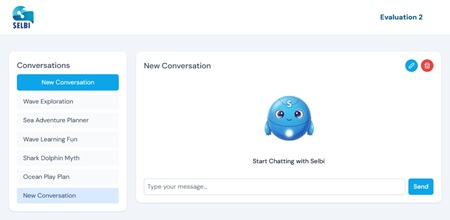
The next phase is live educator testing. Following the necessary approvals, a participating school has been identified, and one educator from each of the ECEC year levels has agreed to collaborate with the research team. Over four months, these educators will work with the SELBI platform, provide structured feedback, and directly inform its refinement.
As the project moves forward, SELBI aims to strengthen early childhood pedagogy in Malta and to offer a scalable model for how artificial intelligence can support marine education in the early years.
The project team consists of six researchers at MCAST: Dr Shirley Ann Gauci (Principal Investigator), Dr Francis Delicata, Mr Alan Gatt, Mr Frankie Inguanez, Dr Heathcliff Schembri and Ms Kimberly Terribile.
SELBI is funded by Xjenza Malta under the Research Excellence Programme (Grant Agreement REP-2024-005).
To learn more about the project and follow its progress on SELBI website, Facebook page, and LinkedIn page.
Information and image source:
Attachments:
Image

Offshore Freshened Groundwater (OFG) is a potentially strategic resource for coastal water security. Despite its discovery in the 1960s and estimates of substantial global volumes, OFG remains poorly understood. Existing data are sparse and largely incidental, originating from offshore hydrocarbon drilling. Research efforts so far have lacked coordinated approaches to assess OFG’s potential for sustainable use.
Advancing the understanding of OFG systems requires research into their emplacement history and age, as well as recharge and discharge mechanisms. Investigations into permeability, porosity, and fluid flow pathways will improve predictions of OFG behaviour under natural conditions and potential utilisation scenarios. Fluid flow processes, hydraulic properties, and connectivity between onshore and offshore aquifers must be studied to assess long-term viability and estimate the sustainable yield of an OFG reservoir. Understanding recharge processes under current conditions should be a prerequisite before any large-scale exploitation, as abstraction could significantly impact the freshwater-saltwater interface.
Scope of the call
The primary objective of this Joint Call is to act as a “proof of concept” through the launch of a pioneering scientific drilling campaign that integrates hydrogeological and geochemical characterisation, with pumping tests, to validate OFG systems and generate critical data on their distribution, properties, recharge mechanisms, and long-term viability as a resource.
This initiative aims to lay the groundwork for the potential future strategic use and sustainable management of OFG resources. The campaign will target knowledge gaps, including:
Data scarcity and inconsistency: generating systematic and comprehensive data on OFG properties and dynamics.
Environmental, technological, and economic feasibility: assessing the environmental impacts and evaluating the technological and economic viability of potential OFG utilisation.
Legal and governance frameworks: informing and potentially contributing to the development of guidelines and regulatory frameworks for the integration of OFG exploration and exploitation into existing regimes.
The following themes are identified as priorities for the Joint Call:
1. Characterisation, validation, and assessment of offshore freshened groundwater bodies, through a drilling campaign. Scientific questions originated from knowledge gaps:
Functioning of OFG systems and onshore-offshore connectivity
Age of emplacement of the OFG
Hydraulic and hydrogeologic properties
Potential environmental impacts emerging from use of OFG
2. Environmental assessment of offshore freshened groundwater seeps (developing environmental baselines)
Seep characterisation (functioning of seepage)
Seep-related ecosystems characterisation (bio-geochemical aspects)
Monitoring
The geographical spread of the proposed research should include the northern Adriatic Sea but will not exclude studies in other European marine basins, including other marginal seas of the Mediterranean Sea, the North Sea and the Baltic Sea.
This call is expected to be launched on 4 December 2025 with a deadline on 6 March 2026.
Visit the below link to read further.
Information and image source:
Attachments:
Image

The Euro-Mediterranean Hub for Research & Innovation (R&I) is live connecting researchers, policymakers, institutions, and funders across the Euro-Med region.
The Euro-Med Hub serves as a one-stop platform to explore research outcomes, best practices, policy papers, and collaboration opportunities, including funding calls, networks, and clusters.
This initiative supports the implementation of the UfM Regional Platform on Research and Innovation Roadmaps, strengthening Mediterranean cooperation in key areas such as health, renewable energy, and climate change.
Why join the Hub?
• Centralised resources – Access research, best practices, policy documents, and funding opportunities.
• Networking – Connect with the Mediterranean R&I community, including clusters and experts.
• Collaboration – Find partners, join communities of practice, and engage in policy dialogue.
• Events & opportunities – Stay updated on regional initiatives and calls for participation.
📄 Download the official flyer and learn more
👉 Register today to connect, collaborate, and make the most of the Hub’s networking and funding opportunities!
Information and image source:
Attachments:
Image

MindOnly has developed an Artificial Intelligence tool that can assess your attachment style. This Malta-based research project, supported by Xjenza, has created a platform that reads non-verbal cues to better understand users. This may prove to be a useful personal development tool and, crucially, a valuable resource for mental health practitioners.
We are a product of our upbringing. Our relationships with our parents, or the lack thereof, can be pivotal in shaping expectations for each subsequent relationship. This process begins within a year of our birth, through pre-verbal bonds with primary caregivers. If these formative attachments are traumatising, they disorder how we connect with others. Our understanding of this is in its own infancy. Attachment theory is less than a century old, a mere blink of an eye next to the history of generational trauma. It is utilised by mental health practitioners such as psychologists and counsellors, either to better understand causal factors in people’s mental health issues or to maintain a healthy, secure relationship between therapist and patient.
Broad public understanding of attachment theory is brand new, surging into popular consciousness via social media virality. We want to understand ourselves, and to repair what we can. MindOnly is meeting this demand. They have recently concluded a research project on an AI-based video assessment tool, with the support of Xjenza Malta. Their project, titled ‘Mental Health Care Automated Video Interview Diagnosis with AI, has culminated in a virtual interviewer that reads non-verbal cues, such as facial expressions, to better determine a patient’s attachment style. This empathic AI is an example of what could be the future of psychotherapy – affective computing.
The project ‘Mental Health Care Automated Video Interview Diagnosis with AI’ was financed by Xjenza Malta through the FUSION: R&I Technology Development Programme LITE.
Continue reading further by visiting the below link.
Information and image source:
Attachments:

The Technology Development Programme (TDP) is a national funding programme designed to support research, development, and innovation (RDI) through strong collaboration between public entities and industry partners.
The main objective of TDP is to accelerate the development of innovative products and services, enabling them to progress from a minimum Technology Readiness Level (TRL) of 4 to TRL 7 within the project lifecycle.
Successful applicants may benefit from funding of up to €500,000 for projects with a duration of 24 to 36 months, within the following SMART Specialisation Areas:
Aviation and Aerospace
Future Digital Technology
Health and Wellbeing
Marine and Maritime Technology
Smart Manufacturing
Sustainable Use of Resources
Additional Support through the Commercial Voucher Programme (CVP)
Applicants may also apply for the Commercial Voucher Programme (CVP) to access additional funding of up to €14,000, supporting preparatory activities such as:
Intellectual Property Check – verification of novelty and IP potential.
Commercial Viability Test – market research and economic feasibility assessment.
This component must be completed within the first six months of the project’s lifecycle. Should the results prove insufficient, the beneficiary will be granted a second opportunity to undergo the CVP, subject to the necessary amendments identified following the outcome of the initial CVP run.
TDP 2025 Application
Interested applicants must submit the completed, signed and dated application form electronically to rtdi.xjenzamalta@gov.mt, keeping in copy Mr Nicholas Caruana Pedersen (nicholas-caruana.pedersen.1@gov.mt), Ms Mariah Vella (mariah.vella.5@gov.mt) and Mrs Rachel De Bono (rachel.de-bono@gov.mt), with “TDP 2025 – Application” as the subject heading.
The deadline for submission is January 23, 2026, at 11:59p.m.
Information Session
An online information session with further details on the TDP 2025 call will be held on November 17, 2025, at 10:00a.m. Kindly register your interest through the following link: TDP 2025 Call Info Session | Registration – Google Forms
Visit the below link to download the guidelines and application form.
Information and image source:
Organisation:
Xjenza Malta
Call Deadline:
Friday, January 23, 2026
Further Information:
External Link
Image

About this initiative:
This ‘call for evidence’ targets all stakeholders from national and regional administrations and research and innovation communities, including higher education, vocational education, and training institutions, research performing organisations, research and scientific communities, private-sector businesses including SMEs, technology centres, research and technology infrastructures, scientific advice and technology assessment structures and organisations, scientific publishers, and the general public.
This public consultation is first published in English. Translations into other 23 EU official languages will be available shortly. The consultation will remain open for 12 weeks after all translations become available.
Topic: Employment and social affairs, Research and innovation, Single market
Type of act: Proposal for a regulation
Public Consultation period: 13 October 2025 to 5 January 2026
Read further on the below link.
Information and logo source:
Attachments:
Image

Xjenza Malta invites experts to express their interest to participate in the scientific evaluation within the upcoming Horizon Europe Partnership on Brain Health (EP BrainHealth). This initiative brings together 53 partners from 31 countries to bolster scientific collaboration for better brain health across Europe and beyond.
Who we are looking for
We seek internationally recognized scientists to participate in the scientific evaluation of project proposals under the BrainHealth Joint Calls 2026. Evaluators should have expertise in one or both of the following call topics:
Call topic 1: Biological, social and environmental factors that impact the trajectory of brain health across the lifespan – in the field of neurological, mental and sensory disorders
Call topic 2: Biological, social and environmental factors that impact the trajectory of brain health across the lifespan – in the field of neurodegeneration
Experts of any nationality can apply. Selections will ensure balanced representation across disciplines, regions and gender.
Your role
Selected evaluators by the Brain Health Call Secretariat will review and assess transnational research proposals through an online evaluation system during the pre-proposal stage and potentially in the full-proposal stage. Each proposal will be independently assessed by three evaluators, ensuring fairness and transparency throughout the process.
Requirements
Applicants must:
Not be involved in any pre/full proposal submitted under the BrainHealth Calls 2026
Possess extensive experience in brain health research or related domains
Declare no conflicts of interest
Key details
Deadline: Friday, 14 November 2025 (COB)
Application materials: Annex 1 Submission Form & detailed CV
Submission email: eusubmissions.xjenzamalta@gov.mt (email subject: “BrainHealth Call for Experts 2026”)
CC: Mr. Kaylen Borg (kaylen.borg.1@gov.mt)
Evaluators will be reimbursemed for travel and accommodation expenses related to participation in the Peer Review Panel, as per the Brain Health guidelines.
Download the below document for further guidelines, including the submission form Annex 1.
Information source:
Attachments: External Link
Image
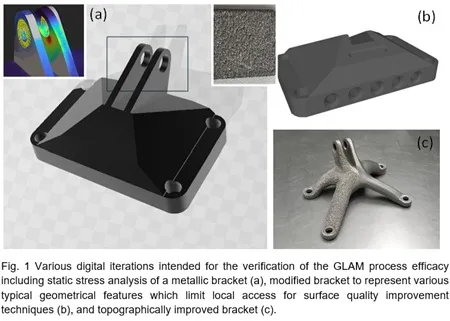
Metal 3D printing, or additive manufacturing (AM), has revolutionized industries by enabling the creation of complex components with unparalleled design freedom. However, a persistent challenge has been achieving smooth surface finishes, particularly in techniques like Electron Beam Powder Bed Fusion (EB-PBF). Enter the GLAM project, a collaborative endeavour between the University of Malta and the University of Shandong (China), addresses this challenge. GLAM, short for Green Laser Post-Processing in Additive Manufacturing, aimed to refine the surfaces of EB-PBF printed parts, ultimately enhancing their performance and broadening their applications.
EB-PBF, while offering advantages in material efficiency and design complexity, tends to produce rough surfaces due to the high temperatures involved. This roughness can negatively impact crucial properties like fatigue life and wear resistance. These factors are especially important in sectors like aerospace, where the high strength-to-weight ratio of materials like Ti-6Al-4V (a commonly used titanium alloy) is critical.
The GLAM project approached this problem on multiple fronts, combining optimized manufacturing parameters with innovative post-processing techniques. Researchers explored two key post-processing strategies: chemical immersion and laser surface engineering. The University of Malta focused on chemical immersion, employing controlled etching processes to remove surface imperfections, while the University of Shandong handled laser surface engineering, using focused laser beams to smooth and refine the outer layer of the printed parts. The impact of these methods was tested and characterized using characterisation techniques like microscopy and mechanical testing to assess their surface roughness, tensile strength, axial-fatigue resistance, and even tribological (wear) behaviour. Results indicated that improving surface condition (upwards of 30% reduction in Ra roughness) enhanced mechanical response under load. While dry sliding friction showed limited impact, wear tests under lubricant-starvation conditions revealed significant reductions in wear rate after both acid and laser treatments. These results suggest that the removal of loose, semi-sintered powder and brittle metal protrusions from the as-produced surface creates lubrication reservoirs, lowering friction over extended periods. Digital simulation was also adopted to couple topological optimization with surface condition, overall aiming at the design of lightweight yet strong components.
Beyond the technical advancements, GLAM fostered valuable international collaboration and skills development. The project strengthened research ties between Malta and China, facilitating knowledge exchange and paving the way for future joint projects. Crucially, the expertise gained in AM techniques, software, and characterization methods has been embedded within the University of Malta, ensuring a lasting impact on its research capabilities. The enhanced printing strategies and parameter knowledge are directly transferable to other metal AM printers and AM technology, such as wire additive techniques, positioning the university at the forefront of AM research.
The project's findings have been disseminated through various channels, including publications in local media and presentations at international conferences, reaching both specialized and general audiences. The GLAM project demonstrates how focused research and international collaboration can overcome challenges in additive manufacturing, paving the way for higher-performance and more reliable 3D-printed metal components across diverse industries.
The GLAM project brought together expertise from the University of Malta, including Prof. Inġ. Glenn Cassar who led the project, Prof. Arif Rochman, Prof. Inġ. Ann Zammit, Dr Andre Giordimaina, Mr Kris Bajada, Mr Danjel Grima and Dr Inġ. Bonnie Attard from the Malta College of Arts, Science and Technology. The Maltese team partnered with fellow academics from Shandong University, China, including Prof. Guoxin Lu and Dr Qiag Wang from the AEEC Institute of Aeronautical Materials. The work described in this article was carried out as part of the GLAM (SINO-MALTA-2022-13) project which was financed by XJENZA Malta and the Ministry for Science and Technology of the People’s Republic of China (MOST), through the SINO-MALTA Fund 2022 (Science and Technology Cooperation).
Information and image source:
Attachments: External Link
Image

The Sustainable Blue Economy Partnership, a European Partnership under the European Commission’s Research & Innovation Framework Programme Horizon Europe, is pleased to announce its first Thematic Portfolio Call for Interest. This call aims to connect ongoing projects to create and boost networking activities for a 2-year period, from early 2026 to early 2028.
Two active networking portfolios will be established, composed of projects granted by the Sustainable Blue Economy Partnership as well as by a range of national, regional and EU funding streams on these two topics:
- Topic 1: Innovations and digitalisation for low-impact sustainable small-scale fisheries management in EU sea-basins
- Topic 2: Innovations for boosting sustainability in marine algae cultivations and circularity in the blue bioeconomy
The Thematic Portfolios of projects will be connected and will define their own roadmap of activities. With the support of the Partnership, the portfolios are expected to increase transnational synergies at the EU scale, boost quadruple helix multi-stakeholders’ collaboration, and respond to the challenges and opportunities identified within each topic. By reaching a critical mass of projects focusing on similar thematics, this action will contribute to leveraging the projects’ impact at the European level by e.g. providing efficient scientific support for strategic and political decision making, whilst also addressing research gaps and avoiding duplication.
Some of the benefits of participating in the Thematic Portfolios are:
- Increased visibility at the international level
- Networking with quadruple-helix stakeholders
- Career boost, especially for early career scientists
- Identification of new opportunities for cooperation
- Identification of potential beneficiaries of the project outputs
- Co-design market-uptake plans
- Meetings with EU Commission experts
- Participation in Partnership events (e.g. biennial symposium)
To participate:
- Projects must fall in the thematic scope of the portfolios.
- Projects must be active and ongoing during the Thematic Portfolio Activities timeframe and must be receiving a regional/national/EU grant.
- Projects must address at least one geographical area among: Mediterranean Sea, Black Sea, Baltic Sea, North Sea, Atlantic Ocean. If applicable, projects may target regional areas (e.g. Arctic Ocean, Barents Sea, Celtic Sea, Adriatic Sea, Aegean Seas, etc.) or their scope must prove to be relevant for one or more of the above-mentioned geographical areas.
- Applicants must prove their commitment, availability and capacity to engage in the activities (as self-funded).
- Project Principal Investigators (and alternates, if any) must be employed by an organisation belonging to one of the countries1 of the Partnership and must be a stakeholder from one of the four major sectors of the quadruple helix (industry, government, research institutes, and the public).
Deadline: 30 October 2025, 15:00 CET, now extended to 12 November 2025
Visit the below link to download call specifications and application forms.
Information and image source:
Attachments: Subscribe to