-
 Welcome to plumtriA platform for Research & Innovation
 -
 Looking for Funding?Check out the current open calls
 -
 Register today to start receiving our monthly newsletter
 -
 Looking to partner up?Search our list of registered profiles
 -
 You have questions on a particular funding programme?

Scheme / Call Title
THCS Call 2026 - Access to Care Stage 2
Topic
Access to Care
Type of Partner Sought
Higher education / University
EQUAL-ESS (Equitable Access to Endoscopic Spine Surgery) is a European THCS2026 “Access to Care” project coordinated by Erasmus MC Rotterdam. The project has successfully passed the first evaluation stage and is currently preparing for the full proposal phase.
The project investigates why proven, high-value healthcare innovations remain unevenly accessible across European health systems, despite their demonstrated clinical and societal benefits. Using endoscopic spine surgery (ESS) as a “tracer intervention,” the consortium examines broader barriers linked to reimbursement and financing systems, referral pathways, organisational incentives, workforce capacity, the implementation of value-based care, and equitable access to care.
Following reviewer feedback, the consortium is currently seeking additional Malta-based partners under the THCS widening measure. In particular, it is looking for organisations or experts with expertise in Health Technology Assessment (HTA), health economics, health policy, implementation science, primary care, patient organisations, insurance or payer perspectives, and integrated care pathways.
Contact Details
Dr. Sanjay Harhangi
Erasmus MC Rotterdam
Coordinator – EQUAL-ESS
b.s.harhangi@erasmusmc.nl
Call Deadline:
Thursday, May 28, 2026
Image
The THCS Joint Transnational Call 2026, “Access to Care”, has now progressed to the full proposal stage.
Malta continues to participate under the Widening initiative, allowing Malta-based entities to still join international consortia at this stage of the Call. Widening measure - Consortia with fewer than 9 partners may include one additional partner from an underrepresented funding organisation at full proposal stage, subject to eligibility and invitation.
Xjenza Malta has allocated a national budget of €500,000 to support the participation of Malta-based entities in successful projects. This Joint Call 2026 aims to fund research and innovation projects that contribute to ensuring equitable access to and utilisation of health and care services. Through the funded research and innovation projects, policy and decision makers should gain the knowledge and tools necessary to implement the reallocation of resources as the health and care system undergoes a transition to meet new and ongoing challenges.
Projects funded under this call will build on existing evidence to deliver innovative solutions that enable key stakeholders to reduce inequalities in access to and utilisation of health and care services. Projects will address how to improve access to all levels of health and care through financial models, models for delivering health and care services and setting up of interdisciplinary integrated care programmes.
Key Dates
Full proposal submission (THCS platform): 30 June 2026, 14:00 CEST (by Project Coordinator)
National submission (Xjenza Malta): 30 June 2026, 23:59 CEST via eusubmissions.xjenzamalta@gov.mt
Partner Search Tool
Applicants can:
Browse existing consortia
Indicate availability or expertise to join a proposal Browse or share your expertise via the partner search tool: https://partfinder.ncbr.gov.pl/ (filter: THCS Call 2026 widening)
We encourage all interested stakeholders to review the call text and national rules when joining this opportunity to advance equitable health and care systems.
For further details, visit the Xjenza Malta THCS Webpage and the THCS website. For any queries, you may contact us at eusubmissions.xjenzamalta@gov.mt
Attachments:
As people live longer, more older adults experience frailty and problems balance and mobility. These increase the risk of falls and loss of independence. Rehabilitation can help, but many people cannot easily access face-to-face services due to distance, limited resources, or lack of professionals. Digital solutions may help, but only if they are easy to use, affordable, and fair for everyone. BRIDGE CARE explores how a motor telerehabilitation system can support older people in their rehabilitation and how primary and community care can guarantee their access. The system allows users to perform exercises using their own body movements, which are tracked through digital technology. This makes rehabilitation more flexible and can reduce the need for frequent visits to healthcare centres. The project aims to understand how telerehabilitation can be integrated into real public health services. It will analyse barriers, how resources are used, which solutions would be better accepted, how implementation processes can be improved, and how costs could be reduced compared to usual care. Special attention will be given to ensuring fair access for people with different social backgrounds, digital skills, and living conditions. Pilots will take place in Spain, Portugal and France. We will study how easy the system is to use, how people feel about it, how the implementation can be facilitated, and whether it reaches people from different backgrounds, including those with low digital skills or living in remote areas. An important part of the project is listening to people. We will interview policymakers, health managers, technology experts, healthcare professional sand end-users/patients. Their views will enable co-designing better solutions. By working together with all these groups, BRIDGE CARE aims to make telerehabilitation practical, affordable and accessible, so digital care can truly benefit society.
Contact Details
David Verde Lopez – dverde@idiapjgol.org
Call Deadline:
Tuesday, June 23, 2026
The THCS Joint Transnational Call 2026, “Access to Care”, has now progressed to the full proposal stage.
Malta continues to participate under the Widening initiative, allowing Malta-based entities to still join international consortia at this stage of the Call. Widening measure - Consortia with fewer than 9 partners may include one additional partner from an underrepresented funding organisation at full proposal stage, subject to eligibility and invitation.
Xjenza Malta has allocated a national budget of €500,000 to support the participation of Malta-based entities in successful projects. This Joint Call 2026 aims to fund research and innovation projects that contribute to ensuring equitable access to and utilisation of health and care services. Through the funded research and innovation projects, policy and decision makers should gain the knowledge and tools necessary to implement the reallocation of resources as the health and care system undergoes a transition to meet new and ongoing challenges.
Projects funded under this call will build on existing evidence to deliver innovative solutions that enable key stakeholders to reduce inequalities in access to and utilisation of health and care services. Projects will address how to improve access to all levels of health and care through financial models, models for delivering health and care services and setting up of interdisciplinary integrated care programmes.
Organisation:
Xjenza Malta
Call Deadline:
Tuesday, June 30, 2026
Further Information:
External Link
Scheme / Call Title
ONE ESSE (Turkey) is looking for a Malta-based SME, research organisation, or innovation partner for the TÜBİTAK – Xjenza Malta 2026 bilateral R&D call.
Type of Partner Sought
Higher education / University
Project: ONE ESSE VERIFIED™
Focus areas:
• AI-supported sustainability verification
• Digital Product Passport (DPP)
• Agro-food traceability
• GS1 EPCIS 2.0 infrastructure
• QR-based proof systems
The project aims to develop an AI-supported verification and traceability platform for sustainable agro-food and resource systems aligned with EU DPP/ESPR requirements.
Description of Idea
We are looking for partners with expertise in:
• AI / software systems
• sustainability data
• digital platforms
• agro-food systems
• EU R&D projects
Concept note ready.
Deadline: 5 June 2026.
Contact Details
Mr. Bircan Herdem
ONE ESSE
info@oneesse.com
Call Deadline:
Friday, June 05, 2026
Sustained collaboration of national and regional cancer funders to support the Cancer Mission through translational research (TRANSCAN-4), bringing together 19 organisations from 15 countries, launched a Joint Transnational Call 2026 on the topic of Translational Research on Cancer Metabolism: Multidisciplinary Approaches for Diagnosis and Treatment.
Xjenza Malta is proud to participate as an official partner in this initiative, enabling Malta-based researchers, clinicians, and organisations to contribute to cutting-edge translational research on cancer metabolism. Eligible projects may access up to €300,000 in funding per project.
Eligibility criteria
To be eligible, applicants must:
Comply with the National Rules for Participation;
Be a Malta-based entity, including private and public entities, RKDOs, and other organisations with an operating base in Malta, in accordance with State Aid or Non-State Aid national rules;
Complete and submit a National Application Form and Budget Breakdown Form, duly signed and accompanied by the required annexes.
Key Dates
Deadline for submission of pre-proposal: 21 July 2026, 12:00 CET by the Project Coordinator via TRANSCAN-4 Electronic Submission Tool.
Deadline for submission of National Application Form and Annexes: 21 July 2026, 23:59 CET via email to eusubmissions.xjenzamalta@gov.mt
To familiarise interested applicants with this funding opportunity and answer any questions, Xjenza Malta is organising an information session on 4 June 2026, 10:00-11:00 CET.
Register for the information session here.
Information and image source;
Organisation:
TRANSCAN-4
Call Deadline:
Tuesday, July 21, 2026
Further Information:
External Link
Image
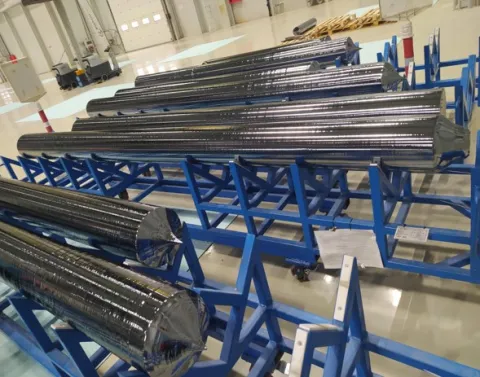
The SLICE (SiLicon for Improved Cell Efficiency) project aims to improve the quality of silicon crystals used in solar cells in order to increase solar panel efficiency and manufacturing yield. Since bulk silicon is used in more than 90% of solar cells, even small efficiency gains can have a major global impact. For example, a 0.5% improvement in solar panel efficiency could provide an additional 4 GW of global energy capacity, enough to power up to two million homes. While recent efficiency improvements have mainly resulted from better manufacturing methods and purer materials, defects formed during silicon crystal growth are still known to reduce solar cell performance.
The project investigates how these grown-in defects form and evolve in commercial gallium-doped silicon crystals and evaluates their effect on advanced solar cells. Researchers are studying wafers taken from different regions of silicon crystals with varying oxygen concentrations and growth conditions, while also engineering silicon samples with controlled defect densities and sizes.
The collaboration brings together the University of Malta, led by Prof. Luciano Mule’ Stagno and Dr Inġ. Marija Demicoli, the Middle East Technical University – Centre for Solar Energy Research and Applications (ODTÜ-GÜNAM), led by Dr Bülent Arikan, and industrial partner KalyonPV, led by Ms Ece Çamkara. The work is funded through the Xjenza Malta-TÜBİTAK 2024 Joint Call for R&I Proposals.
KalyonPV has successfully produced the gallium-doped silicon crystals used in the study, while the University of Malta is currently performing defect analysis using infrared light scattering tomography. Simultaneously, research work at ODTÜ-GÜNAM is focusing on fabricating high-efficiency PERC and TOPCon solar cells to directly link material defects with device performance.
Attachments:
Image
The European Commission has announced plans for a new European Ocean Act aimed at strengthening ocean governance and supporting the sustainable development of the blue economy across Europe. The proposal also focuses on improving maritime spatial planning, the process of organising how marine areas are used for activities such as shipping, fishing, offshore energy and environmental protection.
The proposal forms part of the wider European Ocean Pact, which seeks to create a more coordinated approach to the management of Europe’s seas. It also aims to improve marine protection, strengthen ocean observation systems and reduce fragmentation between existing EU marine policies.
A public consultation on the proposal is currently open until 16 July 2026, with the Commission inviting feedback from governments, researchers, maritime industries, coastal communities and citizens across the European Union. More information about the consultation and how to participate is available through the European Commission’s consultation portal.
The growing importance of maritime spatial planning and sustainable marine management is acknowledged by projects such as MEDSEAPLAN, a three-year initiative launched in 2024 and financed through the Sustainable Blue Economy Partnership. The project focuses on sustainable marine planning and the blue economy, a term used to describe economic activities linked to oceans and seas, ranging from traditional sectors such as fisheries and shipping to emerging industries including offshore renewable energy and marine biotechnology.
Led by the World Ocean Council, the project brings together 16 partners from eight countries: France, Turkey, Spain, Malta, Italy, Cyprus, the Netherlands and Germany. The consortium is working to improve marine data collection, support ecosystem-based maritime spatial planning and develop future planning scenarios for the Mediterranean region through research, digital monitoring tools and cross-border collaboration.
MCAST is representing Malta in the MEDSEAPLAN project and is leading the initiative’s Ocean Literacy activities, which focus on increasing public understanding of maritime spatial planning, sustainability and marine governance. The work includes educational and outreach initiatives aimed at helping students, researchers and the wider public better understand how decisions about the sea can affect industries, coastal communities and the marine environment.
The project also prioritises stakeholder engagement, bringing together maritime industries, researchers, policymakers and national authorities through interviews, workshops and collaborative meetings. These collaborations are intended to improve transparency, strengthen cooperation and support more informed decision-making on the future management of Mediterranean marine areas.
With the European Commission planning to adopt the legislative proposal for the European Ocean Act by the end of 2026, projects such as MEDSEAPLAN are expected to play an increasingly important role as Mediterranean countries face increasing pressure linked to shipping activity, tourism, fisheries, coastal development and climate change. Recent storms and extreme weather events across the region have further highlighted the need for coordinated
marine planning, stronger environmental management and long-term cooperation between governments, researchers and maritime industries.
Project MEDSEAPLAN is financed by Xjenza Malta through the Sustainable Blue Economy Partnership that is supported by the European Union through Horizon Europe.



Attachments:
Image
Author: Christian Keszthely
Modern alternating-current motors have an awkward dependency: the drive control system must always know the rotor's position. That tiny fact – a position, measured again and again – decides whether a car glides off the line or shudders, whether a crane holds steady or lurches. It matters far more than it sounds n electric cars, trains, cranes, and aircraft, the rotor inside the motor has to stay in sync with the electrical currents that power it. If the timing is off, the motor can stutter, shake, or stop working. To prevent this,
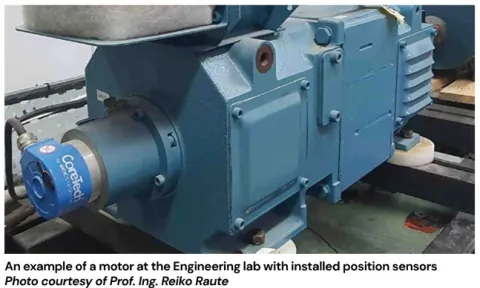
most modern electric motor drive systems use position sensors. ‘It is a very important device. But it is also the weak link,’ says Prof. Ing. Reiko Raute, Associate Professor of Electrical Engineering at the University of Malta and Principal Investigator for the project ‘Permanent Magnet Synchronous Motor Design for Position Sensorless Drives (SensorlessPMSM)’. Position sensors report the rotor’s location to the controller thousands of times per second. They help motors run smoothly and reliably, but they also add cost and complexity, and make the system more fragile. ‘In a small motor, sometimes the motor itself is cheaper than the sensor,’ Raute explains. ‘And when something breaks, it is often the sensor that breaks first.’ Raute’s research asks a simple question: Can we design a motor that does not need a sensor, since we can figure out its position from its behaviour?
WHY MOTORS NEED TO ‘KNOW THEMSELVES’
Think of pushing someone on a swing while blindfolded. If you cannot tell where the swing is, you might push at the wrong time or in the wrong direction. The swing slows down or moves unpredictably. Electric motors face a similar challenge. Modern motors – especially permanent magnet synchronous motors (PMSMs) used in electric vehicles – run on carefully timed alternating currents. These currents must always align with the position of the rotor’s magnets. ‘The phase of the voltage we apply is always aligned with the magnets,’ Raute says. ‘Otherwise, the motor will not work very well.’ This alignment is not optional. It happens continuously, often more than 2,000 times per second. The controller reads the rotor’s position, calculates the correct current, applies
it and repeats – over and over again. That’s the job of position sensors. They work like a GPS for the motor, always reporting the rotor’s location. But what if we could read the rotor’s position another way?
THE COST OF KNOWING TOO MUCH
Position sensors are precise, but like any mechanical part, they wear out and can fail over time. ‘They are fine mechanical systems with small cables,’ Raute explains. ‘They can break more easily than the motor itself.’ A sensor might cost a car maker
about €50, but replacing it can cost the owner hundreds. Across millions of cars, this becomes a big expense. In safety-critical systems – like electric aircraft or high-speed trains – the stakes are even higher. ‘They often use double encoders,’ Raute notes, ‘because this is a functional safety device.’ More parts mean more potential points of failure. More wiring adds weight. More maintenance leads to more downtime. If we could remove the sensor and still have reliable control, it would represent a substantial shift.
THE PROMISE – AND LIMITS – OF SENSORLESS CONTROL
Engineers know that motors emit useful signals as they run. When a motor spins, it creates voltages and currents that indicate what is happening inside. At medium and high speeds, these signals are clear, and back-EMF methods are common. Back-EMF is the small voltage a spinning motor generates in opposition to the power driving it – effectively, it is the motor talking back to its controller. ‘When the motor rotates fast enough, this problem is solved,’ Raute says. ‘You can buy many motor controllers with sensorless control.’ The problem arises at low speeds, especially when the motor is stopped. At zero speed, there’s no back-EMF, since it only appears when the motor is turning. But this is when control matters most – like starting a car on a hill, moving aircraft wing flaps, or lifting with a crane. At low speeds, engineers look at another signal: inductance.
READING THE MOTOR’S FINGERPRINTS
Inductance changes as the rotor moves because of the motor’s shape and materials. Steel, magnets, and air all affect the magnetic fields inside. In theory, these changes can be measured, and the rotor’s position estimated, even when it is not moving. But in practice, every motor is different, and the signal is complex ‘The signal that you see is sometimes very weird and difficult to understand,’ he explains. ‘And this signal depends on the motor design.’ For years, researchers have tried to build better algorithms to read these signals. Raute worked on this during his Ph.D. research more than 20 years ago. ‘We put intelligence into the inverter,’ he says. ‘We could see clear signals, but sometimes they did not make sense.’ Over time, it seemed the issue might not be with the algorithms, but with the signals from the motor itself.
TURNING THE PROBLEM INSIDE OUT
Most research tries to get better information from existing motors. Raute’s team asks a different question: what if we designed the motor to give clearer signals? ‘Up to now, people always worked with off-the-shelf motors,’ he explains. ‘But most motors give very weird signals at some point.’ Modern simulation tools make this possible. Using finite-element software, Raute’s team builds detailed virtual motors, including the steel, magnets, and windings, and studies their behaviour. ‘Fifty years ago, this was not really
possible,’ he says. ‘Now we can really see how the motor behaves.’ The simulations show that even small changes in magnet
placement, shape or steel geometry can make the inductance signal much clearer – or much more erratic. ‘It may be very simple to arrange the magnets a little bit differently,’ Raute says, ‘so that sensorless control works much better at very low speeds.’
A NEEDLE IN A MAGNETIC HAYSTACK
Designing motors is already a trade-off. Engineers have to balance efficiency, size, torque, cost and material availability. Rare-earth magnets are strong, but they are expensive and difficult to source. These are permanent magnets manufactured from alloys of rare-earth elements – primarily neodymium (NdFeB) or samarium-cobalt (SmCo) – which belong to the lanthanide series
of the periodic table and enable exceptionally high magnetic energy density relative to their size. ‘Manufacturers try to get the
highest efficiency, the smallest size, and maybe even get rid of some permanent magnet material,’ Raute explains. Making the motor easier to read without sensors adds another challenge. ‘There are endless possibilities,’ he says. ‘The size, the shape, and the location of the magnets – they change everything.’ Right now, the research is a mix of science and trial-and-error. ‘We are still a bit in a trial-and-error phase,’ Raute admits. ‘We try many different designs and see what effect they have.’ The team examines factors such as current effects, magnetic saturation, and steel geometry, and studies how they interact. Artificial intelligence may help search through all these design options in the future. But first, the fundamentals need to be understood. ‘AI needs to be rained on something,’ Raute notes. ‘And no one has done this before.’
WHY ZERO SPEED MATTERS
Most people do not think about zero-speed control until something goes wrong. ‘A motor usually starts from zero speed,’ Raute says. ‘And in this state, you want to know the rotor position very well.’ If the controller does not know the rotor’s position, it might send the wrong current. The motor can jerk, shake or act unpredictably. That is why cars use encoders to sense position. ‘As soon as you turn on the electronics, it knows where the rotor is,’ Raute explains. If sensorless control worked well at zero speed, many systems could be simpler. Cranes and lifts could hold loads more safely. Aircraft could use lighter electric systems instead of hydraulics on wing flaps. ‘The piping system of hydraulics is very heavy,’ Raute says. ‘The cables of a motor are lighter.’
FEWER PARTS, FEWER FAILURES
Reliability might be even more important than cost savings. ‘Motors themselves are very strong,’ Raute says. ‘Big copper windings, big bearings.’ But sensors are fragile. ‘If you can remove the encoder,’ he explains, ‘you reduce maintenance, space and failure points.’ And because PMSMs are already the preferred choice for electric vehicles and aircraft – thanks to their efficiency and power-to-weight ratio – improving their robustness has an outsized impact. ‘If you have some intellectual property on how to design the motor cleverly,’ Raute says, ‘this would be worth a lot of money.’
WHERE THE RESEARCH STANDS
The project is still in progress, and the research team continues to move at a steady pace. ‘We hope at least to have a good software model by the end of April,’ Raute says. A hardware prototype might come later, but simulations are not perfect yet. Still, the goal is clear. Instead of making algorithms work harder to read noisy signals, the team wants to redesign the motor to produce a
cleaner signal. As Raute says: ‘We try to design a motor that gives us a clean signal that we can really use.’ If motors can be designed to reveal their position through their own physics, one of electrification’s most persistent dependencies simply falls away.
Project ‘Permanent Magnet Synchronous Motor Design for Position Sensorless Drives (SensorlessPMSM)’ is financed by the Xjenza Malta for and on behalf of the Foundation for Science and Technology, through the FUSION: R&I Research Excellence Programme.
Information and image source:
Attachments:
Following the “From research to business: Turning knowledge into jobs, innovation and growth” conference held in Malta on 13–15 October 2025, organised by the Union for the Mediterranean (UfM) in partnership with Xjenza Malta, the Research to Business (R2B) Programme is now open for applications.
The R2B Programme is a regional initiative supporting research teams across the Mediterranean to transform scientific knowledge into market‑ready, commercially viable innovations. It is initiated by the UfM, in partnership with the Spanish Agency for International Development Cooperation (AECID), aligned with the UfM R&I Agenda and the 2022 UfM R&I Ministerial Declaration, and implemented by Berytech in collaboration with ANIMA Investment Network and the University of Barcelona.
R2B offers:
Structured commercialisation support
Mentoring and expert guidance
Regional visibility
Access to a regional network of industry, investors, and innovation stakeholders
The programme is open to applied research teams developing projects with a clear application or proof of concept that address regional challenges and demonstrate strong commercialisation potential.
Eligibility: Applicant teams (with at least one core founder) must originate from countries eligible under the Spanish Cooperation’s Masar Programme: Egypt, Jordan, Lebanon, Morocco, Palestine, Tunisia, Mauritania, Algeria, and Syria.
Researchers are encouraged to apply, and stakeholders are invited to share this opportunity within their networks to help build a cross‑Mediterranean innovation community driving real‑world impact.
Information and image source:
🔗 More information and application: [https://berytech.org/programs/ufm-research-to-business/]
Organisation:
Union for the Mediterranean (UFM)
Application Deadline:
Monday, June 01, 2026
Email address:
rayan.chaaban@berytech.org
Further Information:
External Link