-
 Welcome to plumtriA platform for Research & Innovation
 -
 Looking for Funding?Check out the current open calls
 -
 Register today to start receiving our monthly newsletter
 -
 Looking to partner up?Search our list of registered profiles
 -
 You have questions on a particular funding programme?

Polymer-MEMS-based sensors
Image
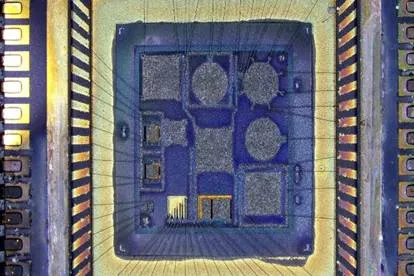
The PolyMEMSens (Polymer-MEMS-based sensors) project represents a significant step forward in the development of next-generation low-cost air quality monitoring technologies. Conducted through a collaboration between the University of Malta and Sabancı University in Turkey, the project focuses on designing highly sensitive microelectromechanical systems (MEMS)-based sensors for detecting volatile organic compounds (VOCs), particularly isopropyl alcohol (IPA), in real-time environments.
At the core of the innovation is a piezoelectric MEMS resonator coated with a functional polymer film. This polymer is engineered to selectively absorb target gas molecules, causing measurable frequency shifts in the resonator. This approach enables compact, high-sensitivity, low-cost, sensing suitable for Internet of Things (IoT) applications, including smart homes, industrial monitoring, and healthcare systems.
During the project, researchers developed and tested multiple MEMS prototypes coated with different polymer materials, including polypyrrole and poly(N-vinylcaprolactam). A custom-built experimental setup allowed precise control of environmental conditions such as temperature, humidity, and gas concentration. Using signal processing and amplitude-based frequency tracking techniques, the system demonstrated the ability to detect minute frequency changes, down to sub-ppm levels, correlated with VOC exposure.
Results confirmed a clear relationship between gas concentration and sensor resonant frequency response, with fast response times of under two minutes. However, the study also revealed a critical challenge: the durability of polymer coatings. Several prototypes exhibited coating degradation and peeling, which affected measurement accuracy and long-term reliability.
The findings provide valuable insights for future improvements, particularly in enhancing polymer adhesion and sensor robustness possibly through the use of intermediate layers.
Overall, the PolyMEMSens project highlights the potential of combining MEMS technology with advanced materials to create efficient, scalable, and intelligent air quality monitoring solutions for the future.
Acknowledgement
This project was financed by Xjenza Malta through the Xjenza Malta-TÜBİTAK 2023 Joint Call for R&I Proposals.
Attachments: