-
 Welcome to plumtriA platform for Research & Innovation
 -
 Looking for Funding?Check out the current open calls
 -
 Register today to start receiving our monthly newsletter
 -
 Looking to partner up?Search our list of registered profiles
 -
 You have questions on a particular funding programme?

SMACORT Project Pioneers Sustainable Construction with 3D Printing
Image
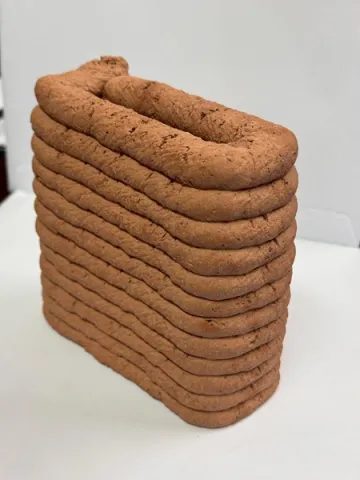
The SMACORT project (3D manufacturing of developed sustainable coating materials for building retrofitting and energy efficiency) is showcasing how 3D printing can transform construction by combining digital fabrication with recycled waste materials to improve building performance and sustainability.
At its core, the project focuses on turning construction and demolition waste into valuable resources. Discarded ceramic tiles and crushed concrete are processed into fine powders and used to create a cement-free geopolymer mortar. This eco-friendly material reduces CO₂ emissions while helping to address the growing challenge of construction waste.
To further improve energy efficiency, the system integrates phase change materials (PCMs), which absorb and release thermal energy to help stabilise indoor temperatures. This passive approach reduces the need for energy-intensive heating and cooling systems, supporting more sustainable building operation.
A key achievement of SMACORT is the successful optimisation of 3D printing techniques to produce modular façade panels. These were installed in a real-world setting in an industrial building at the Public Abattoir in Marsa, Malta, demonstrating the transition of the technology from laboratory research to practical application.
Building on this work, the University of Malta is further developing 3D concrete printing using limestone waste, recycled aggregates, and industrial by-products. A gantry-type 3D printer is being used to test material performance, focusing on key properties such as pumpability, extrudability, buildability, strength, and durability.
Together, these initiatives highlight how 3D printing can enable high-performance, low-impact construction solutions and support the modernisation of existing buildings in a more sustainable way.
The project is funded through the Xjenza Malta–TÜBİTAK 2023 Joint Call for R&I Proposals. For further information contact Prof. Ruben Paul Borg, Faculty for the Built Environment, University of Malta (ruben.p.borg@um.edu.mt)
Attachments: