-
 Welcome to plumtriA platform for Research & Innovation
 -
 Looking for Funding?Check out the current open calls
 -
 Register today to start receiving our monthly newsletter
 -
 Looking to partner up?Search our list of registered profiles
 -
 You have questions on a particular funding programme?

Engineering Better Silicon for the Next Generation of Solar Cells
Image
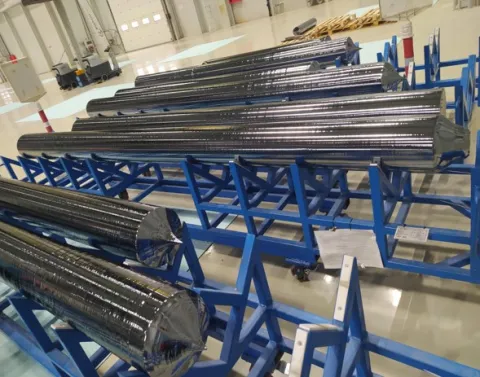
The SLICE (SiLicon for Improved Cell Efficiency) project aims to improve the quality of silicon crystals used in solar cells in order to increase solar panel efficiency and manufacturing yield. Since bulk silicon is used in more than 90% of solar cells, even small efficiency gains can have a major global impact. For example, a 0.5% improvement in solar panel efficiency could provide an additional 4 GW of global energy capacity, enough to power up to two million homes. While recent efficiency improvements have mainly resulted from better manufacturing methods and purer materials, defects formed during silicon crystal growth are still known to reduce solar cell performance.
The project investigates how these grown-in defects form and evolve in commercial gallium-doped silicon crystals and evaluates their effect on advanced solar cells. Researchers are studying wafers taken from different regions of silicon crystals with varying oxygen concentrations and growth conditions, while also engineering silicon samples with controlled defect densities and sizes.
The collaboration brings together the University of Malta, led by Prof. Luciano Mule’ Stagno and Dr Inġ. Marija Demicoli, the Middle East Technical University – Centre for Solar Energy Research and Applications (ODTÜ-GÜNAM), led by Dr Bülent Arikan, and industrial partner KalyonPV, led by Ms Ece Çamkara. The work is funded through the Xjenza Malta-TÜBİTAK 2024 Joint Call for R&I Proposals.
KalyonPV has successfully produced the gallium-doped silicon crystals used in the study, while the University of Malta is currently performing defect analysis using infrared light scattering tomography. Simultaneously, research work at ODTÜ-GÜNAM is focusing on fabricating high-efficiency PERC and TOPCon solar cells to directly link material defects with device performance.
Attachments: