-
 Welcome to plumtriA platform for Research & Innovation
 -
 Looking for Funding?Check out the current open calls
 -
 Register today to start receiving our monthly newsletter
 -
 Looking to partner up?Search our list of registered profiles
 -
 You have questions on a particular funding programme?

Image

On 16 September 2026, Commission President Ursula von der Leyen will deliver her annual State of the Union address to the European Parliament.
The State of the Union is an important moment in the EU’s democratic calendar. It is an opportunity to reflect on the past year, outline the European Union’s priorities for the year ahead and announce new initiatives. The address is followed by a debate with Members of the European Parliament, reinforcing democratic accountability.
This year's address will take place on Wednesday, 16 September, from 09:00 to 11:50 CEST at the European Parliament in Strasbourg and will be livestreamed online.
In her address, President von der Leyen will share her vision and present major initiatives for the year ahead, building on the EU's achievements so far. We encourage you to follow the address and stay informed about the priorities and initiatives that will shape the EU's agenda in the coming year.
More information about the State of the Union, including the livestream and communication materials explaining what the speech is and why it matters, following the external link below ⏬
Information and image source:
Attachments:
Image
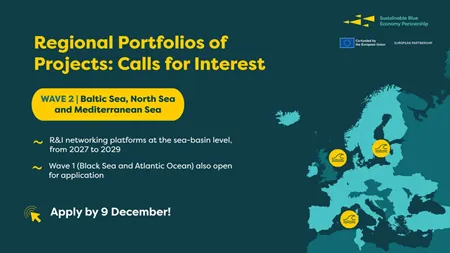
Following the first wave covering the Atlantic Ocean and Black Sea, this new round expands to the North Sea, Baltic Sea and Mediterranean Sea.
The Regional Portfolios aim to connect ongoing projects addressing common challenges at sea-basin level, providing a platform to exchange knowledge, strengthen collaboration and create regional synergies.
The three Regional Portfolios will focus on:
🌊 North Sea – Exploring nature-based solutions to address cumulative impacts on marine ecosystems while supporting maritime uses.
🌊 Baltic Sea – Strengthening resilience to large-scale events, including infrastructure and ecosystem resilience.
🌊 Mediterranean Sea – Fostering inclusive governance and multi-use coastal and maritime infrastructure for sustainable development.
Projects interested in joining should be active during the Regional Portfolio activities, align with the relevant geographical and thematic scope, and have the capacity and commitment to actively contribute.
📝 Expression of Interest deadline: 9 December 2026 at 15:00 CET
💻 Information webinar: 7 October 2026, 13:00–14:30 CEST An excellent opportunity to connect projects, share expertise and strengthen collaboration across Europe’s sea basins.
More information: Follow the external link below ⏬
#SustainableBlueEconomy #BlueEconomy #SBEP #ResearchAndInnovation #MarineResearch #Mediterranean #BalticSea #NorthSea
Information and mage source:
Attachments:
Image
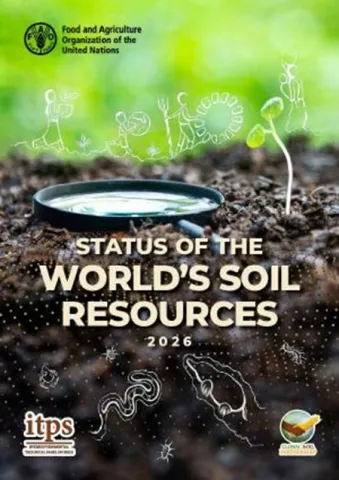
Soils are a unique resource providing a wide range of services for ecosystem functioning and human well-being. Despite more than a hundred years of soil science history, we still do not fully understand the dynamics and status of the world's soils, and efforts to protect, conserve and sustainably manage this valuable resource have always been limited by knowledge.In an effort to improve understanding of the status of this resource and to identify threats and activities leading to its degradation, the Intergovernmental Technical Panel of Soils (ITPS) supported by the Food and Agriculture Organization of the United Nations and its Global Soil Partnership (GSP) embarked in 2014 on the preparation of a global assessment to enable countries to better understand what actions should be taken to promote sustainable soil management. The Report on the Status of the World Soil Resources (SWSR) 2015 is a reference work and a milestone among the documents assessing global soil quality and soil health change. Its publication was possible thanks to the work of the first ITPS. Ten years later, in 2026, the ITPS and the GSP secretariat publishes a second edition of the SWSR where all the scientific documents and publications reporting on the evolution of the status of soils and of the different soil threats will be taken into account, together with regional assessments, to know what has been the trend of the status of soils in these 10 years and where are we facing to.
Continue reading ⏬
Information and image source:
Attachments:
Image
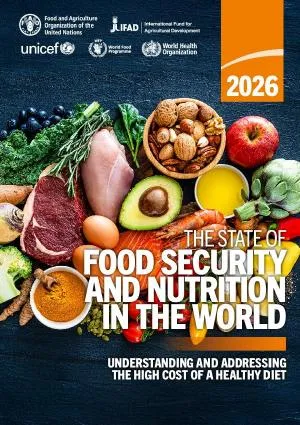
Despite sustained, gradual improvement in recent years, global hunger and food insecurity remain far above the targets set by the 2030 Agenda for Sustainable Development. It is estimated that 645 million people faced hunger in 2025. Beyond ensuring access to sufficient dietary energy, populations must have economic access to safe, diverse and nutritious foods. Yet, healthy diets are unaffordable for about 2.7 billion people worldwide, with the crisis deepening particularly in Africa. The 2026 edition of The State of Food Security and Nutrition in the World evaluates this pressing challenge, exploring the structural drivers behind the persistently high cost of a healthy diet. This report reveals that the high prices of nutrient-dense items – specifically animal source foods, fruits and vegetables – account for nearly 70 percent of the cost of a healthy diet. By leveraging existing data and analytical tools, it examines how geographical disparities, agricultural productivity deficits, and value chain inefficiencies, including food loss and waste, create formidable barriers to accessing a healthy diet. To sustainably achieve Zero Hunger, policymakers must implement targeted, multisectoral interventions, from shifting agricultural subsidies towards horticulture, to investing in robust cold chains and transport networks. This report provides a comprehensive strategy for governments and stakeholders aiming to structurally lower diet costs and safeguard human capital, while avoiding the hidden costs of agrifood systems.
Information and image source:
Attachments:
Image
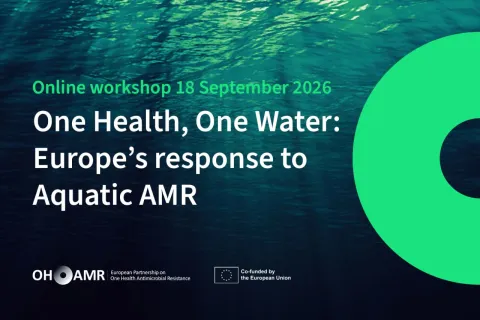
Xjenza Malta, as a partner in the European Partnership on One Health Antimicrobial Resistance, is pleased to co-organise the upcoming One Health, One Water: Europe's Response to Aquatic AMR workshop. Bringing together experts, researchers, and policymakers, the workshop will facilitate knowledge exchange and explore coordinated approaches to addressing antimicrobial resistance in aquatic environments through a One Health framework.
Workshop Details
📅 18 September 2026
⏲️10:30 to 15:40 CEST
💻Online
👉🏽 See the full programme and register using the external link below 👇🏽
Information and image source:
Attachments:
Image
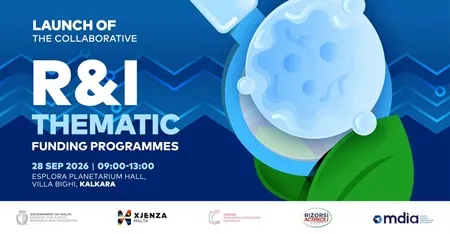
Join Xjenza Malta on 28 September 2026 for the R&I Xjenza Malta Thematic Funding Launch Event. The three thematic Calls include:
- The 3rd Cancer Research Programme, in collaboration with Cancer Research Innovation Hub Malta
- The Digital Innovation Programme and Digital Vouchers Programme, in collaboration with the Malta Digital Innovation Authority
- The Water Innovation for Sustainable Agriculture Research Programme, in collaboration with Riżorsi Agrikoli Malta
Join us to learn more about the programmes with unique opportunities to connect with our partners and stakeholders, driving these initiatives forward.
📅 28 September 2026 | 09:00-13:00
📍 Esplora Planetarium Hall, Villa Bighi
👉🏽Visit Xjenza Malta website for more information:
✍🏽 Register here.
Attachments:
Image
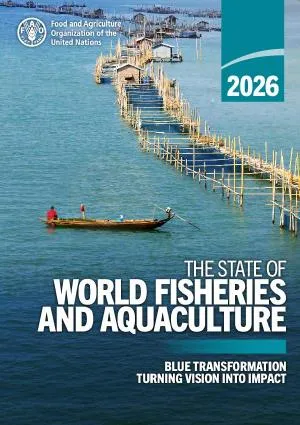
The State of World Fisheries and Aquaculture 2026 provides the latest evidence-based information and insights on challenges, opportunities and solutions shaping the present and future of the sector.
This 2026 edition showcases how FAO is translating the Blue Transformation vision into impact, deploying field projects in close collaboration with Members, partners and key stakeholders. It highlights efforts to maximize the contribution of aquatic foods to global food security, poverty alleviation and economic development, enhancing policy advocacy, advancing scientific research and innovations, and furthering capacity development.
Part 1 presents an up-to-date global review of fisheries and aquaculture production, employment, utilization and trade, benefiting from significant improvements in data collection and in analytical and assessment tools and methodologies.
Part 2 explores the transformational actions being undertaken by FAO, its Members and key stakeholders to catalyse the changes required to support aquaculture expansion and intensification, effective management of global fisheries, and upgrading of aquatic value chains.
Part 3 covers FAO commitments to strengthen aquatic food systems in a holistic manner, with a focus on the role of regional fishery bodies in translating international commitments into actionable regional measures; it emphasizes the importance of global climate research and models to inform adaptive fisheries management policies and decisions. It also presents an outlook on future trends for fisheries and aquaculture development up to 2034 based on projections.
The State of World Fisheries and Aquaculture is aimed at a wide and expanding audience of policymakers, managers, researchers, private actors, civil society activists and consumers.
Continue reading following the external link below 👇🏽
Information and image source:
Attachments:
Image
Extreme heat is emerging as one of the most urgent and least understood threats to agriculture and food security. Rising temperatures, prolonged heatwaves, and shifting climate patterns are already disrupting crop yields, livestock health, water availability, and rural livelihoods – with impacts falling disproportionately on the most vulnerable.Because extreme heat is predictable, strengthening climate services and early warning systems linked to anticipatory actions is a key opportunity. It is also clear that there are profound limits to what adaptation can achieve. With global mean temperatures on the cusp of exceeding the 1.5 °C warming limit outlined in the Paris Agreement, the urgency for adaptation and mitigation action only grows. The only durable solution to protect the future of global agrifood systems from the escalating threat of extreme heat lies in ambitious, multilateral climate change mitigation.
Continue reading:👇🏽
Information and image source:
Attachments:
Image
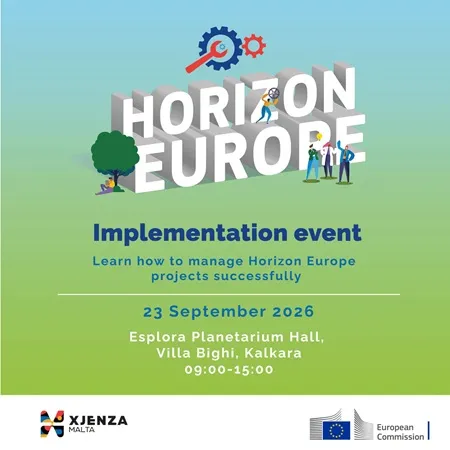
Join Xjenza Malta on 23 September 2026 at the Planetarium Hall, Villa Bighi, Kalkara for a practical event focused on successful implementation and management of Horizon Europe projects.
What’s on the agenda:
- Updates on Horizon Europe 2026–2027
- Insights into Lump Sum Funding
- Guidance on Financial and Legal Obligations
- Navigating Audits and Ex-Post Controls
- Strategies for Bringing Research Results to Market
- Latest developments in the Funding & Tenders Portal
For more details, visit Xjenza Malta website following the external link below👇🏽
Attachments:
Image
Event Announcement: Space Research Night 🌌
Illuminating the Cosmic Dark Ages: The Birth of the First Stars and Galaxies 💫
A public lecture by Prof. Eloy de Lera Acedo (University of Cambridge)
🗓️ Date: Wednesday 23rd September at 6.30pm
📍 Location: Aula Prima, University of Malta (Valletta Campus)
After the Big Bang, the Universe entered a long period of darkness before the first stars and galaxies began to shine. This talk explores that era, from the Cosmic Dark Ages through Cosmic Dawn to the Epoch of Reionisation, and how astronomers are using the faint 21-centimetre radio signal from hydrogen to work out when the first stars formed and how the Universe became transparent to light.
About the speaker
Prof. Eloy de Lera Acedo is Professor of Radio Astronomy at the Cavendish Laboratory, University of Cambridge, where he heads the Radio Astronomy and Cosmology group, and is international Principal Investigator of the REACH telescope and the CosmoCube mission, both built to detect the redshifted 21-cm signal from the early Universe. He is also involved in development for the SKA radio telescope and the HERA experiment.
The lecture is aimed at a general audience; no background in physics or astronomy is required. There will be time for questions at the end.
Organised by the Institute of Space Sciences and Astronomy, University of Malta, together with the Astronomical Society of Malta. Sponsored by Xjenza Malta.
✍🏽 Free registration is now open! Places are limited, so please RSVP as soon as possible. 👇
Attachments: Subscribe to