-
 Welcome to plumtriA platform for Research & Innovation
 -
 Looking for Funding?Check out the current open calls
 -
 Register today to start receiving our monthly newsletter
 -
 Looking to partner up?Search our list of registered profiles
 -
 You have questions on a particular funding programme?

Following the “From research to business: Turning knowledge into jobs, innovation and growth” conference held in Malta on 13–15 October 2025, organised by the Union for the Mediterranean (UfM) in partnership with Xjenza Malta, the Research to Business (R2B) Programme is now open for applications.
The R2B Programme is a regional initiative supporting research teams across the Mediterranean to transform scientific knowledge into market‑ready, commercially viable innovations. It is initiated by the UfM, in partnership with the Spanish Agency for International Development Cooperation (AECID), aligned with the UfM R&I Agenda and the 2022 UfM R&I Ministerial Declaration, and implemented by Berytech in collaboration with ANIMA Investment Network and the University of Barcelona.
R2B offers:
Structured commercialisation support
Mentoring and expert guidance
Regional visibility
Access to a regional network of industry, investors, and innovation stakeholders
The programme is open to applied research teams developing projects with a clear application or proof of concept that address regional challenges and demonstrate strong commercialisation potential.
Eligibility: Applicant teams (with at least one core founder) must originate from countries eligible under the Spanish Cooperation’s Masar Programme: Egypt, Jordan, Lebanon, Morocco, Palestine, Tunisia, Mauritania, Algeria, and Syria.
Researchers are encouraged to apply, and stakeholders are invited to share this opportunity within their networks to help build a cross‑Mediterranean innovation community driving real‑world impact.
Information and image source:
🔗 More information and application: [https://berytech.org/programs/ufm-research-to-business/]
Organisation:
Union for the Mediterranean (UFM)
Application Deadline:
Monday, June 01, 2026
Email address:
rayan.chaaban@berytech.org
Further Information:
External Link
Image
A pioneering step in sustainable construction has been achieved through the SMACORT project, which has successfully demonstrated how advanced 3D printing technology can be
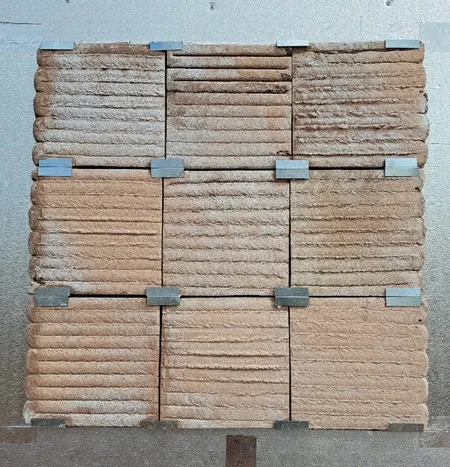
used to produce a low-carbon, thermally efficient 3D-printed façade panel for existing structures. The project’s most visible milestone is the installation of a 3D-printed façade system on an existing structure at the Public Abattoir in Marsa, Malta.
What makes the innovation particularly significant is its environmental sustainability. The façade panels were produced using a cement-free geopolymer mortar made entirely from recycled construction and demolition waste, including crushed concrete and ceramic tiles. Using a gantry-style 3D printer, the material was shaped into modular 40x40 cm panels designed for efficiency and adaptability.
Nine of these modules were assembled into a 1.2 x 1.2-meter test section directly on an industrial building at the Public Abattoir. The panels feature a specially designed reciprocating pattern that improves insulation and helps naturally regulate indoor temperatures, reducing the need for mechanical cooling systems.
The successful transition from laboratory development to real-world application demonstrates that 3D-printed retrofitting is not only feasible but also highly effective for upgrading existing building stock. The project highlights a promising pathway for making Malta’s historic urban environment more energy-efficient while preserving its architectural identity.
SMACORT is funded through the Xjenza Malta–TÜBİTAK 2023 Joint Call for R&I Proposals.
For more information, contact Principal Investigator Prof. Ruben Paul Borg, Faculty for the Built Environment, University of Malta (ruben.p.borg@um.edu.mt)
Attachments:
Image
The Management Committee of the OFF-SOURCE COST Action (CA21112) is delighted to announce its final conference. This event is the main dissemination hub for our network, uniting leading researchers, industry professionals, policymakers, and early-career investigators to share the latest advancements in the study of Offshore Freshened Groundwater (OFG). Together, we will foster new collaborations, explore the culmination of four years of work, and chart the future for this promising unconventional water resource. We look forward to you joining us to shape the next chapter in OFG research and application.
The primary objective of the RESCUE project is to build knowledge of deep-coastal and offshore low salinity aquifers in European coastal areas, to evaluate novel water resources and to help secure a steady supply of water to both population and industry in times of hydroclimatic extremes.
Objectives
This conference seeks to:
- Disseminate of the key findings and outcomes of the OFF-SOURCE COST Action
- Connect a diverse community of scientists, engineers, water managers, and policymakers.
- Expand the OFG network by fostering collaboration between academic and non-academic partners.
- Define future research priorities and pathways for the sustainable use of OFG resources.
Themes
The scientific program is organized around four key themes reflecting the OFF-SOURCE Working Groups.
Mapping and Characterizing Global OFG Systems
Exploring the fundamental understanding of OFG through data compilation, literature synthesis, and database development. Contributions highlighting the extent, volume, and hydrogeological context of OFG bodies in Europe and beyond are welcome.
Innovative Methods and Technologies for OFG Exploration
Presenting cutting-edge tools for OFG detection and analysis, including geophysical surveys, geochemical methods, hydrogeological modelling, and integrated interpretation of multidisciplinary datasets.
From Resource to Reality: Utilization, Economics, and Feasibility
Bridging science and application by examining the technological, economic, and practical feasibility of OFG as a potable water source. Case studies, industry collaborations, and economic models are encouraged.
Sustainable Management and Governance of OFG Resources
Addressing environmental, legal, and policy challenges for long-term OFG sustainability. Topics include responsible abstraction, environmental impacts, and governance frameworks.
Information and image source:
Attachments: External Link
♻️Join the European Circular Electronics Kickstart (ECEK) Acceleration Program and let’s forge together Europe’s Circular Value Chain for Semiconductors ♻️
You will access:
- 1:1 tailored mentoring to support all areas of your business needs
- MVP piloting with industry partners
- Equity investors and public funding
- Strategic R&D and business development partnerships
- Demo Days and post-program support
✍🏼Who should apply?
We welcome startups world-wide, incorporated from 2019 onwards, TRL 4-8, developing solutions addressing the following challenges:
- Electronics recycling, recovery and remanufacturing.
- Innovative technologies for critical raw materials recovery.
- Photovoltaic recycling solutions and semiconductors extraction.
- Upscale electronics and semiconductors industry circularity and
sustainability.
- Smart manufacturing of electronics and semiconductors.
- New technologies to improve industry’s productivity, efficiencies
and competitiveness.
⌛ Duration: June to Nov 2026
💻 Format: Fully remote / online (English)
📅 Apply by: May 29, 2026
Download the brochure
👉 Turn electronic waste into critical raw materials, scale your venture and boost European Semiconductors Circular Value Chain!
The program is free of charge and equity free. This project is co-funded by the European Union’s I3 instrument under grant agreement N.101228240. Views and opinions expressed are however those of the author(s) only and do not necessarily reflect those of the European Union or EISMEA. Neither the European Union nor the granting authority can be held responsible for them.
Information and image source:
Call Deadline:
Friday, May 29, 2026
Further Information:
External Link
Scheme / Call Title
AI-Enabled Digital Twin for Assessing Mediterranean Agro-Food System Resilience under Energy Price Volatility and Supply Chain Disruptions
Type of Partner Sought
Research Institution
The proposed project is designed to fit the objectives of the TÜBİTAK–Xjenza Malta Joint Call by developing a scientifically rigorous and technologically innovative bilateral research project between Türkiye and Malta. The project addresses a critical challenge for Mediterranean societies: “How agro-food systems can remain resilient under increasing exposure to energy price volatility, input dependency, logistics disruptions, and global supply chain uncertainty?”.
The proposal is positioned at the intersection of Artificial Intelligence, digital transformation, sustainable agro-food systems, and resilience-oriented policy analysis. It aims to develop an AI-enabled Digital Twin framework capable of representing, simulating, and assessing the behavior of Mediterranean agro-food systems under external shocks. The project directly contributes to bilateral cooperation by combining the Turkish team’s expertise in AI, system modeling, and resilience analysis with the expected Maltese partner’s expertise in Mediterranean agro-food systems, local data access, agricultural sustainability, and policy-relevant validation.
The project is not conceived as a conventional farm-level smart agriculture or IoT-based decision-support system. Instead, it focuses on the system-level resilience of agro-food systems by integrating production, input, energy, market, logistics, and policy layers into a dynamic Digital Twin environment. This makes the project relevant to both research excellence and practical decision-making for small and medium-scale Mediterranean food systems.
Mediterranean agro-food systems are increasingly exposed to interconnected shocks arising from energy market instability, rising input costs, logistics bottlenecks, import dependency, and supply chain disruptions. These pressures affect not only farm production but also input availability, production costs, market prices, transportation, food affordability, and policy response capacity. International policy analyses increasingly emphasize that food systems must become more resilient to shocks such as climate change, economic disruption, conflict, and supply chain instability.
This project proposes the development of an AI-enabled Digital Twin for assessing and simulating the resilience of Mediterranean agro-food systems under two major stressors: energy price volatility and supply chain disruptions. The Digital Twin will integrate multi-source data, AI-based predictive models, scenario simulation, and resilience indicators to evaluate how agro-food systems respond to single and compound shocks.
The project will use a comparative Mediterranean perspective involving Türkiye and Malta. Türkiye provides a large, diversified Mediterranean agricultural context, while Malta represents a small-scale, island-based and import-sensitive agro-food system. The Turkish case study will focus on Antalya as a Mediterranean agro-food region characterized by intensive agricultural production, greenhouse systems, strong exposure to energy costs, and climatic similarities with Malta, making it a suitable comparative case for cross-country resilience analysis. This comparison will allow the project to examine how system size, input dependency, supply chain structure, and policy capacity influence resilience outcomes under similar external shocks.
The final outputs will include a conceptual and computational Digital Twin framework, a resilience assessment model, scenario-based vulnerability analysis, policy recommendations, and joint scientific publications. The project is expected to contribute to the scientific literature on agro-food resilience, Digital Twin applications, AI-based scenario modeling, and Mediterranean sustainability transitions.
Description of Idea
Recent research on food system resilience has made important progress in identifying vulnerabilities related to trade dependency, input access, price volatility, climate stress, and logistics disruptions. However, much of this literature remains focused on diagnostic or policy-level analysis rather than dynamic simulation.
In parallel, Digital Twin research has rapidly expanded in agriculture and food supply chains. Recent reviews show that Digital Twins can improve regional food supply chains by supporting decision-making, resource efficiency, traceability, logistics management, and resilience to disruptions (Subeesh & Chauhan, 2026; Zhang et al., 2025; Roman et al., 2025; Monteiro & Barata, 2025). However, the field remains fragmented. Existing studies often focus on specific farms, production operations, or supply chain segments rather than modeling the agro-food system as an integrated socio-technical system.
A second gap concerns the limited integration of energy shocks into Digital Twin models of agro-food systems. Although energy prices strongly influence fertilizer costs, irrigation costs, greenhouse production, transport, and storage (OECD, 2023; OECD, 2024b; OECD, 2024c), most agricultural Digital Twin studies do not explicitly model energy price volatility as a systemic shock.
A third gap concerns the limited use of comparative Mediterranean case studies. Recent Mediterranean food-system studies emphasize resilience, water–energy–food nexus interactions, regional cooperation, and sustainable food-system transformation. However, existing comparative Mediterranean studies remain largely policy-oriented, nexus-oriented, or sector-specific (Drobinski et al., 2025; Lovec, 2023; Dernini & Capone, 2024). This gap is particularly evident for comparative small-island and larger Mediterranean production systems such as Malta and Antalya. They offer a scientifically valuable contrast: Malta is a small, import-sensitive island system, while Türkiye provides a larger and more diversified Mediterranean agricultural system. Comparing these two contexts can reveal how system structure, scale, dependency, and policy capacity shape resilience outcomes.
Therefore, the scientific gap can be summarized as follows:
Existing studies have examined agro-food resilience, supply chain disruptions, agricultural digitalization, and Digital Twin technologies separately. However, there remains a lack of AI-enabled, system-level Digital Twin frameworks capable of simulating Mediterranean agro-food system resilience under combined energy price volatility and supply chain disruption scenarios.
The overall aim of the project is to develop an AI-enabled Digital Twin framework for assessing and simulating the resilience of Mediterranean agro-food systems under energy price volatility and supply chain disruptions.
Specific Objectives
1. To define and operationalize the Mediterranean agro-food system as an integrated production–input–energy–market–logistics–policy system.
2. To identify measurable resilience indicators related to stability, robustness, adaptability, vulnerability, and recovery capacity.
3. To collect and harmonize multi-source datasets from Türkiye and Malta, including production, energy, input, market, trade, logistics, and policy-related variables.
4. To develop AI-based predictive models for estimating the response of key agro-food system variables to energy and supply chain shocks.
5. To construct a Digital Twin simulation environment that integrates AI predictions, scenario parameters, resilience indicators, and system-level feedback mechanisms.
6. To simulate single and compound shock scenarios, including energy price shocks, supply chain disruptions, input availability constraints, and policy intervention scenarios.
7. To compare resilience dynamics between Türkiye and Malta and identify context-specific vulnerabilities, adaptation options, and policy implications.
8. To generate scientific outputs and policy-relevant recommendations for strengthening agro-food system resilience in Mediterranean regions.
Contact Details
Dr.Seyed-Sajad Ahmadpour - Seyed.ahmadpour@atlas.edu.tr
Istanbul Atlas University
Call Deadline:
Saturday, June 20, 2026
Image
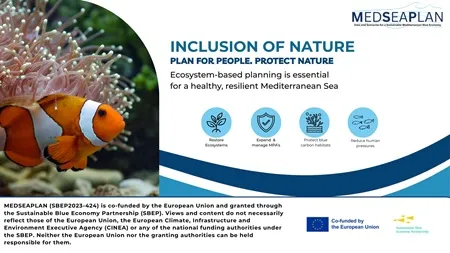
🌿Protecting the Mediterranean means more than drawing lines on a map.
The Mediterranean is one of the world’s richest marine ecosystems — but also one of its most pressured. From tourism and shipping to fisheries and coastal development, human activities continue to place increasing strain on marine habitats already affected by climate change.
Yet nature protection remains one of the weakest areas of Maritime Spatial Planning (MSP) implementation across the region.
Key challenges identified include:
⚠️ Limited ecosystem restoration actions
⚠️ Insufficient Marine Protected Area networks
⚠️ Weak protection of blue carbon ecosystems like Posidonia seagrass meadows
⚠️ Lack of clear measures to reduce environmental pressures at sea
There are still important signs of progress.
-France has mapped Posidonia oceanica ecosystems along its Mediterranean coast — a major step in protecting valuable carbon-storing habitats.
-Spain designated Natura 2000 sites as “Priority Zones for Biodiversity Protection” to help support EU conservation targets.
-Slovenia strengthened environmental assessments by considering cumulative impacts and land-sea interactions in its planning process.
Healthy marine ecosystems are not separate from economic development — they support fisheries, tourism, coastal resilience, biodiversity, and long-term sustainability across the Mediterranean.
As pressures on the region continue to grow, ecosystem-based Maritime Spatial Planning will be essential for ensuring that ocean development works with nature, not against it.
Information and image source:
📊 Source: WWF (2023), Maritime Spatial Planning in the Mediterranean Sea
Attachments:
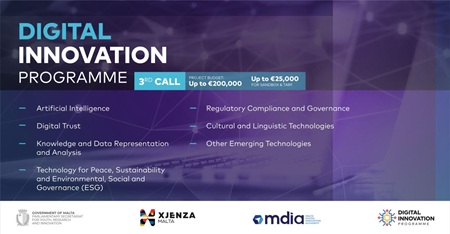
Innovators and researcher from the public sector or the private industry specialising in the field of digital technologies can secure funding of up to €200,000 to research and develop ideas into tangible outcomes.
This year’s programme will focus on 7 priority areas:
- 🤖 Artificial Intelligence
- 🔐 Digital Trust
- 📊 Knowledge and Data Representation and Analysis
- 🌍 Technology for Peace, Sustainability and Environmental, Social and Governance
- 🚀 Other Emerging Technologies
- ⚖️ Regulatory Compliance and Governance
- 🗣️ Cultural and Linguistic Technologies
🔔 Application:
Find the full call text here: Digital Innovation Programme 2026
Information and image source:
Call Deadline:
Wednesday, July 01, 2026
Further Information:
External Link
Image
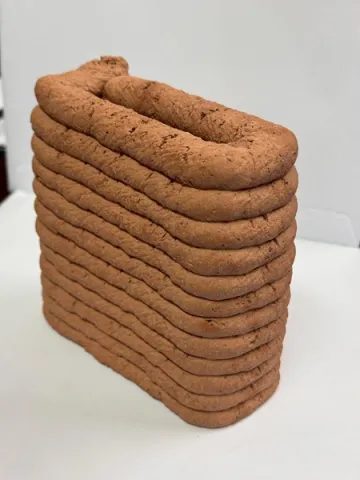
The SMACORT project (3D manufacturing of developed sustainable coating materials for building retrofitting and energy efficiency) is showcasing how 3D printing can transform construction by combining digital fabrication with recycled waste materials to improve building performance and sustainability.
At its core, the project focuses on turning construction and demolition waste into valuable resources. Discarded ceramic tiles and crushed concrete are processed into fine powders and used to create a cement-free geopolymer mortar. This eco-friendly material reduces CO₂ emissions while helping to address the growing challenge of construction waste.
To further improve energy efficiency, the system integrates phase change materials (PCMs), which absorb and release thermal energy to help stabilise indoor temperatures. This passive approach reduces the need for energy-intensive heating and cooling systems, supporting more sustainable building operation.
A key achievement of SMACORT is the successful optimisation of 3D printing techniques to produce modular façade panels. These were installed in a real-world setting in an industrial building at the Public Abattoir in Marsa, Malta, demonstrating the transition of the technology from laboratory research to practical application.
Building on this work, the University of Malta is further developing 3D concrete printing using limestone waste, recycled aggregates, and industrial by-products. A gantry-type 3D printer is being used to test material performance, focusing on key properties such as pumpability, extrudability, buildability, strength, and durability.
Together, these initiatives highlight how 3D printing can enable high-performance, low-impact construction solutions and support the modernisation of existing buildings in a more sustainable way.
The project is funded through the Xjenza Malta–TÜBİTAK 2023 Joint Call for R&I Proposals. For further information contact Prof. Ruben Paul Borg, Faculty for the Built Environment, University of Malta (ruben.p.borg@um.edu.mt)
Attachments:
Image
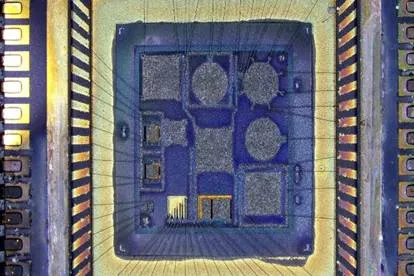
The PolyMEMSens (Polymer-MEMS-based sensors) project represents a significant step forward in the development of next-generation low-cost air quality monitoring technologies. Conducted through a collaboration between the University of Malta and Sabancı University in Turkey, the project focuses on designing highly sensitive microelectromechanical systems (MEMS)-based sensors for detecting volatile organic compounds (VOCs), particularly isopropyl alcohol (IPA), in real-time environments.
At the core of the innovation is a piezoelectric MEMS resonator coated with a functional polymer film. This polymer is engineered to selectively absorb target gas molecules, causing measurable frequency shifts in the resonator. This approach enables compact, high-sensitivity, low-cost, sensing suitable for Internet of Things (IoT) applications, including smart homes, industrial monitoring, and healthcare systems.
During the project, researchers developed and tested multiple MEMS prototypes coated with different polymer materials, including polypyrrole and poly(N-vinylcaprolactam). A custom-built experimental setup allowed precise control of environmental conditions such as temperature, humidity, and gas concentration. Using signal processing and amplitude-based frequency tracking techniques, the system demonstrated the ability to detect minute frequency changes, down to sub-ppm levels, correlated with VOC exposure.
Results confirmed a clear relationship between gas concentration and sensor resonant frequency response, with fast response times of under two minutes. However, the study also revealed a critical challenge: the durability of polymer coatings. Several prototypes exhibited coating degradation and peeling, which affected measurement accuracy and long-term reliability.
The findings provide valuable insights for future improvements, particularly in enhancing polymer adhesion and sensor robustness possibly through the use of intermediate layers.
Overall, the PolyMEMSens project highlights the potential of combining MEMS technology with advanced materials to create efficient, scalable, and intelligent air quality monitoring solutions for the future.
Acknowledgement
This project was financed by Xjenza Malta through the Xjenza Malta-TÜBİTAK 2023 Joint Call for R&I Proposals.
Attachments:
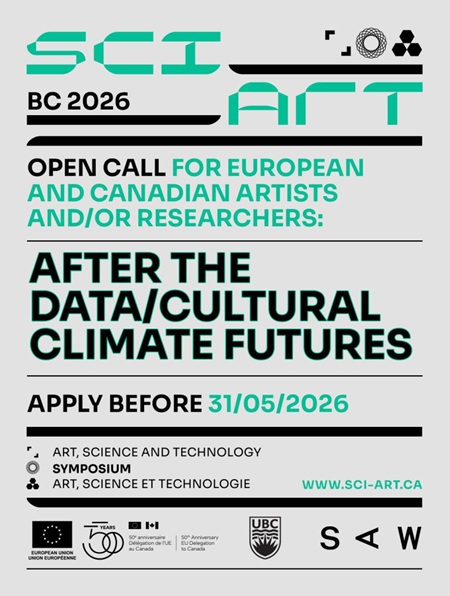
📣Calling all artists/researchers: applications for SCI_ART 2026 are open!
🎨For the second year in a row, the European Union Delegation to Canada and EU Member States, in partnership with The University of British Columbia Okanagan, invites European and Canadian artists working at the intersections of art, science, and technology to propose ambitious, research-driven projects that engage the urgencies of our present moment.
#SCI_ART 2026 convenes a transnational network of practitioners, scientists, and institutions across Canada and the European Union through an Artist-in-Residence program and festival unfolding from September 22 to October 8, 2026, across Vancouver Island, Vancouver, and the Okanagan.
Information and image source:
Call Deadline:
Sunday, May 31, 2026
Further Information:
External Link