-
 Welcome to plumtriA platform for Research & Innovation
 -
 Looking for Funding?Check out the current open calls
 -
 Register today to start receiving our monthly newsletter
 -
 Looking to partner up?Search our list of registered profiles
 -
 You have questions on a particular funding programme?

Image
The European Commission launched BE READY, a new European Partnership for pandemic preparedness. Through BE READY, the European Union will strengthen its capacity to anticipate, prevent and respond rapidly to epidemics and pandemics. BE READY focuses on advancing research on emerging and re-emerging pathogens and accelerating the development of diagnostics, treatments and vaccines.
Ekaterina Zaharieva, European Commissioner for Startups, Research and Innovation, said:
“Europe’s pandemic preparedness must be built on sound scientific foundations. That is why we are making €120 million from the Horizon Europe budget available for the BE READY partnership. Through BE READY, we are putting our citizens’ health first while reinforcing Europe’s innovation leadership.”
This call is accessible through the A2P scheme, where Malta-based entities are eligible for up to €300,000 per proposal.
Information and image source:
Attachments:
Image
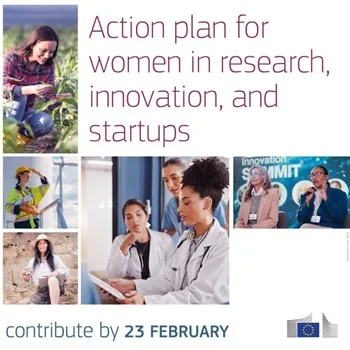
Women represent only 34% of researchers in the EU, with even lower shares in key innovation sectors and decision-making roles.
Earlier this month, Commissioner Ekaterina Zaharieva launched a public call for evidence to shape a dedicated Action plan for women in research and innovation.
It will address persistent gender gaps and promote diversity, equality and inclusiveness in the European Research Area (ERA).
The plan aims to make the ERA the world’s most attractive place for women to work in research, innovation and startups by 2030.
Share your insights on:
⭕Challenges women face in research and innovation, such as underrepresentation and bias.
⭕Specific barriers faced by underrepresented groups.
⭕Solutions to foster equality, diversity, and inclusion and to address gender-based violence.
Information and image source:
Attachments:
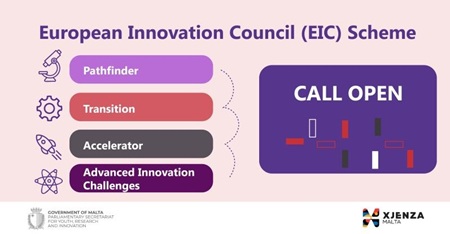
Xjenza Malta is accepting applications under the European Innovation Council (EIC) Support Scheme, designed to boost your chances of success at every stage of the EIC journey 💡
Call Deadline:
Saturday, February 28, 2026
Further Information:
External Link
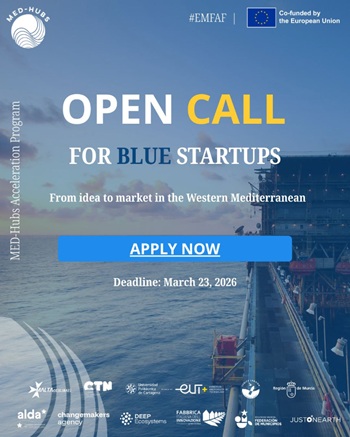
🔊MED-HUBS Acceleration Program🌊 Looking to accelerate your growth and make a real impact across the Mediterranean and beyond?
The MED-Hubs Acceleration Program is here to help you scale, pilot, and showcase your blue-tech solutions internationally! 🚀
💡 Why join?
✔️ Introduction to Equity Investors
✔️ Tailored 1:1 Coaching & Mentoring
✔️ Access to Public Funding
✔️ MVP Pilots Across Europe
✔️ International Business Development
✔️ Post-Program Support
✔️ Exclusive Workshops & Blue Economy Expertise
✔️ Demo Day Showcase (Naples September 2027)
✔️ Global Showcase Opportunities – present at the Global Sustainable Island Summit, Gran Canarias, April 2026.
💡Who should apply? We welcome startups incorporated from 2019 onwards, TRL 4-8, from EMFAF-2025-PIA-FLAGSHIP eligible countries. Specifically, EU member states, non-EU countries part of the EU sea basin strategies, and Overseas Countries and Territories (OCT), developing solutions in:
🔹Sustainable fisheries
🔹Aquaculture & fish farming
🔹Marine renewable energy
🔹Sustainable and green maritime transport
🔹Smart ports and marinas
🗓 Duration: April 2026 to Sept 2027 (3 months 1-to-1 tailored support, followed by 12 months post-program and MVP pilot support)
💻 Format: Fully remote / online (English)
📅 Apply by: March 23, 2026
👉 Join the MED-Hubs Acceleration Program and shape a sustainable future for our oceans! 🌊
The program is free of charge and equity free.
Call Deadline:
Monday, March 23, 2026
Further Information:
External Link
Image
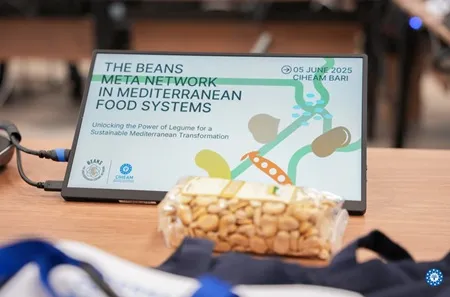
On World Pulses Day, CIHEAM is pleased to present a new initiative: BEANS ! (Boosting Euro-Mediterranean Agri-food through Networked Systems)
This Meta Network promotes legumes as a key part of sustainable Mediterranean food systems. By connecting research, policy, and practice, BEANS supports innovation, knowledge exchange, and capacity building to advance nutrition, climate resilience, and sustainable agriculture across the Mediterranean region.
Information and image source:
Attachments:
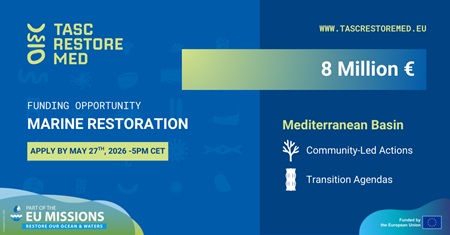
TASC RestoreMed is a flagship initiative under the EU Mission Ocean, “Restore our Ocean and Waters by 2030”. Launched in September 2025, this four-year initiative aims to catalyse the shift towards a sustainable blue economy in the Mediterranean basin, fostering long-term environmental and economic resilience.
TASC-RestoreMed empowers local communities by supporting community-led projects and policy-making initiatives, providing financial support, capacity building, and a vibrant network of collaborations all working together to drive transformative change in marine and freshwater ecosystems.
Ten partners from eight countries join forces as a cohesive network to drive the programme’s objectives: Hellenic Centre for Marine Research (Coordinator – HCMR), National Technical University of Athens (NTUA), Interdisciplinary Centre of Marine and Environmental Research (CIIMAR), Impact Hub Athens (IHA), Asociación Centro Tecnológico Naval y del Mar (CTN), Frederick University (FREDU), University of Maribor (UM), Vlaams Instituut voor de Zee (VLIZ), F6S (F6S) and Infordata (INFOR).
The TASC-RestoreMed programme has launched an open call to fund projects that protect and restore biodiversity in marine, coastal, and inland water ecosystems across the Mediterranean, reduce pollution, and advance a sustainable, circular, and carbon-neutral blue economy.
Community-Led Actions will receive a total of €7 million in funding. A minimum of five projects will be selected, with each receiving a grant ranging from €200,000 to €1.4 million and having a duration of up to 24 months.
Eligible applicants include local authorities, NGOs, citizen groups, universities, research institutions, and companies (including SMEs) that are active in environmental protection or the blue economy and are based in Mediterranean Sea basin countries. Projects must take place in the Mediterranean basin and have at least one partner based in the region.
The selected projects will receive technical support, industry-specific consulting services, and networking opportunities within the broader EU Mission "Restore Our Oceans and Waters by 2030" community. The beneficiaries will also receive tailored guidance on business planning and impact assessment, enabling their solutions to scale and generate measurable impact.
The application window closes on May 27, 2026 (17:00 CEST).
Organisation:
TASC-RestoreMed
Call Deadline:
Wednesday, May 27, 2026
Further Information:
External Link
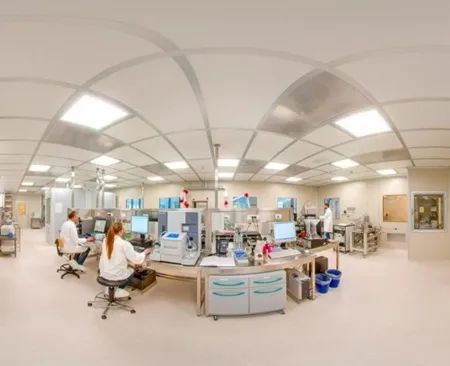
Through a new CERIC-ERIC open call, the JRC Nanobiotechnology Laboratory (Ispra, Italy), the JRC Battery Energy Storage Testing Laboratory and the JRC Fuel Cell and Electrolyser Testing Laboratory (Petten, The Netherlands) continue to offer free access to research organisations, academia and SMEs.
CERIC is a European Research Infrastructure Consortium (ERIC) integrating and providing open access to some of the most advanced analytical facilities in Europe to help science and industry advance in all fields of materials, biomaterials, and nanotechnology, with a focus on energy materials and life sciences.
CERIC-ERIC offers access through a single entry point to more than 60 different and complementary state-of-the art techniques and support laboratories, distributed in 11 countries, with the submission of single or multi-technique proposals. A detailed description of the facilities available in CERIC can be found here.
Attachment
Image
Call Deadline:
Tuesday, March 31, 2026
Further Information:
External Link
Transparency School is an intensive, week-long, state-of-the-art training that brings together future leaders from around the globe to explore the latest strategies in anti-corruption, transparency, and accountability.
Over the past 16 years, we have hosted over 2000 students from more than 135 countries, creating a dynamic international network committed to advancing transparency and good governance.
The School offers a unique platform for participants to learn from leading experts, exchange experiences, and build practical skills to address corruption, accountability, and good governance challenges in their respective contexts. Through lectures, workshops, and interactive sessions, attendees gain the tools and insights needed to make a meaningful impact in their communities and beyond.
Upon successful completion of the programme, 6 ECTS can be obtained with a certificate of training. A limited number of full tuition fee waivers and travel grants are available, awarded based on applicants' motivation and qualifications.
Learn more at www.transparencyschool.org. Browse our Facebook and LinkedIn pages for highlights from previous years and to stay up to date on the event.
Information source:
Organisation:
Transparency School
Application Deadline:
Monday, June 01, 2026
Email address:
admissions@transparencyschool.org
Further Information:
External Link
Embark is a boutique consultancy firm specialising in financial services. The firm has been actively engaged in exploring distributed ledger technology and is currently seeking a potential partner to collaborate with on this call. We would also welcome opportunities to collaborate on research initiatives related to digital twin technology.
Description of Idea
Exploring tokenisation.
Contact Details
Mrs. Gabriella Borda Gauci: gabriella.borda@embark.mt or send an email to international.xjenzamalta@gov.mt for further details.
Call Deadline:
Monday, March 30, 2026
VR NeuroLink AI is an SME operating in the MedTech sector. We develop a clinically oriented VR-based solution for objective assessment of CNS and balance functions and for measurable neurorehabilitation. We are the first to transfer stabilometry (the gold standard of balance assessment) into a virtual reality environment. Our background outside the EU includes validation on 1,000+ patients, 6 clinical implementations, an approved clinical protocol, and a granted patent. In the EU, we are currently building clinical validation and research partnerships.
We’re very open to partnerships with Maltese clinics, medical universities, and research organizations.
Description of Idea
The project aims to clinically validate a VR-based stabilometric assessment and neurorehabilitation solution in cooperation with Maltese partners. The focus is on neurological conditions such as post-stroke disorders, Parkinson’s disease, balance impairments, and CNS-related dysfunctions. The cooperation would include clinical feedback, patient involvement, data collection for validation, and joint preparation of grant applications at national and EU level.
Contact Details
Raman Tsimafeyeu Founder & CEO, VR NeuroLink AI: ceo@vrworldmedtech.pl or send an email to international.xjenzamalta@gov.mt for further details.
Call Deadline:
Monday, March 30, 2026