-
 Welcome to plumtriA platform for Research & Innovation
 -
 Looking for Funding?Check out the current open calls
 -
 Register today to start receiving our monthly newsletter
 -
 Looking to partner up?Search our list of registered profiles
 -
 You have questions on a particular funding programme?

Xjenza Malta is currently seeking to recruit an Executive (R&I) to help shape the future of research and innovation in Malta.
In this role, the selected candidate will strengthen the impact of the FUSION programme by guiding projects from concept to market, ensuring that public investment delivers meaningful economic and societal value. You will support beneficiaries throughout the project lifecycle, coordinate R&I programmes, and foster collaboration with national and international partners.
This is a unique opportunity to play a key role in building Malta’s innovation ecosystem—connecting ideas with industry, driving growth, and turning research into real-world impact.
For more information and how to apply, please click here.
Organisation:
Xjenza Malta
Application Deadline:
Monday, April 20, 2026
Email address:
recruitment.xjenzamalta@gov.mt
Further Information:
External Link
✍️Applications are now officially open for the Urban Mobility Startup Creation Program 2026, a free and fully online initiative led by BGI – Sustainable Ventures and co-financed by EIT Urban Mobility. This program aims to support future entrepreneurs in creating startups with real impact in the urban mobility sector.
💰With up to €10,000 in prizes for the top-performing teams, the program offers one-on-one mentorship, support in developing an investor-ready MVP, access to a leading international innovation network, and the opportunity to pitch your project at the Demo Day, in front of early-stage investors.
📋The program will provide essential early-stage startup tools through Bootcamp stage (19-26 May), a Mentorship phase (3 June- 22 July) and final pitch Demo Day (4th Aug.)
Who should apply?
Student entrepreneurs
Individuals or teams at the idea or prototype stage
Technically skilled founders seeking business support
Pre-incorporation teams
⏱️Applications are open until May7!
We’ve attached a press kit with images, text, and the application link ready for sharing.
⚠️ If you believe this program is perfect for you, we would love to receive your application.
Apply here!!!!
Information and image source:
Organisation:
Urban Mobility
Call Deadline:
Thursday, May 07, 2026
Further Information:
External Link
Visit the below link to view the 13 funding opportunities on Cascade Funding portal, an instrument by the European Commission.
Please note that these calls have different deadlines within the month of April 2026.
Information and image source:
Organisation:
Cascade Funding
Application Deadline:
Thursday, April 30, 2026
Email address:
hello@sploro.eu
Further Information:
External Link

About the job
If you want to make a difference to the future of sustainable energy and would like to work on a multi‐billion euro first‐of‐a‐kind development project, we have the perfect opportunity for you! Apply to become Corporate Services Officer within our Administration Department of Fusion for Energy.
The Corporate Services Officer will support the Head of Unit in managing and coordinating all corporate services activities, ensuring operational excellence and compliance with organisational standards, as well as ensuring a functional, safe and secure workplace for all people working within premises in Barcelona and Cadarache.
Fusion for Energy is managing Europe’s contribution to ITER, the biggest fusion experiment, and is contributing to several other major projects in the same domain. The fusion landscape is changing fast and F4E as a key European player has just entered in a new organisation.
Information and image source:
Organisation:
Fusion for Energy
Application Deadline:
Wednesday, May 06, 2026
Email address:
@f4e-jobs.gestmax.eu
Further Information:
External Link
Image
The JPI Oceans Blue Carbon Knowledge Hub is pleased to announce the publication of its second policy brief: ‘Pathways and opportunities for a better policy integration of Blue Carbon Ecosystems under the EU LULUCF Regulation’. This Knowledge Hub is led by Ireland with participation from Germany, Greece, Malta, Norway, Portugal and the United Kingdom.
The brief was developed by the Knowledge Hub’s Policy Working Group with the support of the Norwegian Environment Agency, and it provides targeted recommendations for a better policy integration of blue carbon ecosystems under the EU Land Use and Land Cover Change Framework (LULUCF) Regulation. These blue carbon ecosystems, primarily seagrass meadows, salt marshes and mangrove forests, are classified as ‘coastal wetlands’ in the Supplement to the 2006 IPCC Guidelines for National Greenhouse Gas Inventories: Wetlands.
The LULUCF Regulation is central to ensuring that blue carbon ecosystems are fully accounted for in the EU’s climate framework. Strengthening its implementation will help integrate coastal wetlands into greenhouse gas inventories, improving recognition of their role in carbon sequestration and long-term climate mitigation.
The protection and restoration of blue carbon ecosystems for climate change mitigation aligns closely with the objectives of the EU LULUCF Regulation, which aims to enhance carbon removals and reduce emissions from land use and land-cover change. Implementing these recommendations would support EU Member States in accounting for coastal wetlands within their greenhouse gas inventories, strengthening the role of blue carbon in achieving EU climate targets and contributing to long-term carbon neutrality goals.
This is the second in a series of three briefs by the JPI Oceans Blue Carbon Knowledge Hub, designed to support EU policymakers and stakeholders in incorporating blue carbon ecosystems into major European regulatory frameworks.
The first brief, published in June 2025 and launched at the UN Ocean Decade Conference in Nice, focused on the Marine Strategy Framework Directive (MSFD), a cornerstone policy for the development of a common EU approach to blue carbon.
The third and final brief to be released later this year will focus on the Nature Restoration Regulation (NRR). It will provide guidance on the inclusion of blue carbon in national restoration plans and supporting implementation of the regulation.
The broader objective of the JPI Oceans Blue Carbon Policy Working Group is to advance actionable and science-based recommendations that support the monitoring, protection and restoration of blue carbon ecosystems as part of Europe’s climate and biodiversity ambitions.
Read the full LULUCF policy brief:
Attachments:
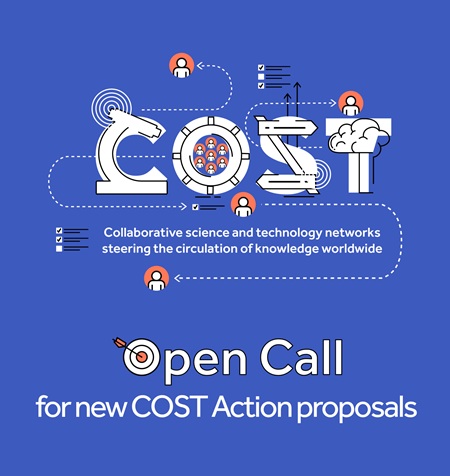
A COST Action is an interdisciplinary research network that brings together researchers and innovators to investigate a topic for four years. Open to all science and technology fields, including new and emerging ones, COST Actions are also bottom-up meaning you can propose a network based on your own interests or ideas.
The funding a COST Action receives covers the expenses of networking activities and can be used to fund events, Short-Term Scientific Missions, Training Schools, communication activities, and virtual networking tools. A COST Action has an estimate budget of €150,000 in its first year and on average €180,000 per year for the other three years.
Our 2026 Open Call for new COST Action proposals will open this summer. If you’re familiar with our existing submission and evaluation procedure you might notice some changes so we want to keep you up-to-date on what to expect and highlight what’s new:
🕸️ Expand your network of proposers
Historically, a network of proposers comprises at least seven COST Full or Cooperating Members amongst which at least 50% are from COST Inclusiveness Target Countries. Now, in addition, at least 40% of proposers must be Young Researchers and Innovators.
📂 One role per Open Call
In each Open Call, an individual may participate either as Main or Secondary Proposer in one proposal only.
🗳️ New submission tool developments (e-COST)
To make it easier, the Technical Annex is no longer a separate document and is a integrated part of the submission process to be completed directly via the e-COST platform.
The system also won’t allow you to submit a proposal if you exceed page and text limits, helping ensure eligibility.
⌛The timeline
e-COST will open for submission on 31 July 2026 (12:00 noon CEST) and close on 28 October 2026 (12:00 noon CET).
You can already start building your network and preparing your proposal. Please check the Open Call Proposers Guidelines for the general features of the proposal that will need be needed for submission and also the Open Call Announcement. All relevant documents are available in our Documents and Guidelines section.
💰 More funding opportunities
COST will fund up to 80 COST Actions in it’s 2026 call, an increase on the 70 networks that were funded last year. This improves the success rate for applicants and provides greater opportunities for short-term mobility, networking, and transfer of knowledge.
ℹ️ Join our online Info Day
If you would like further information on the COST Open Call then join our online Info Day on 16 June (from 10:00 to 12:00 CEST). The aim of the event is to inform the research community on how to participate in COST Actions or submit a COST Action proposal, as well as the role and impact of the COST programme. Register your attendance here.
Call Deadline:
Friday, July 31, 2026
Further Information:
External Link
Image
The Offshore Clean Hydrogen Production for Multi‑use Purposes project (OCEAN‑H2), developed within the framework of the Sustainable Blue Economy Partnership led by the Department of Electrical Engineering at the University of Malta with the cooperation of UNINA, RISE, Fraunhofer ISIT, and UTBM, has received official recognition as a Decade Action under the UN Decade of Ocean Science for Sustainable Development 2021–2030.
The endorsement granted by the Ocean Decade marks an important milestone for the consortium and confirms the scientific, technological and strategic relevance of the activities carried out within the project, highlighting the project’s contribution to advancing cutting‑edge research and strengthening collaboration among academic institutions, research organisations, and stakeholders in the marine and energy sectors.
The OCEAN‑H2 consortium welcomes this achievement with great satisfaction and renewed commitment, reaffirming its dedication to contributing meaningfully to a more sustainable future for the ocean and for the communities that depend on it. Further information on the Ocean Decade programme are available online.
Attachments:


The European Network on Cultural Management and Policy, ENCATC, launches two Opportunities for Young and Emerging Researchers & Professionals, inviting PhD candidates and early-career scholars working in cultural policy and cultural management to participate in two initiatives. Both initiatives are organised within the ENCATC Congress on Cultural Management and Policy 2026, taking place 23–25 September 2026 in Nice, France, in partnership with the Université Côte d’Azur, under the theme: “Artists and Cultural & Creative Professionals at the Centre: Rethinking Work, Policy, and Cultural Ecosystems”.
The two initiatives are:
the ENCATC Research Award, recognising outstanding doctoral research;
This award recognizes research that demonstrates academic rigor and originality while proving methodological innovation, interdisciplinary approaches, and meaningful impact. The award highlights research that pushes beyond traditional boundaries to address complex issues in transformative ways. Each year, the award is presented to a recently defended doctoral/PhD thesis at the ENCATC Research Award Ceremony, held annually during the ENCATC Congress. The award exemplifies scholarly excellence by addressing contemporary issues, showcasing a robust research design, and demonstrating the potential to influence policy and benefit practitioners.
the Young and Emerging Researchers Forum (YERF), providing a platform for PhD candidates and emerging scholars to present and discuss their research.
The ENCATC Young and Emerging Researchers Forum (YERF) is specifically designed for the new generation of talented researchers in the field of cultural management and policy, to advance in their careers and enlarge their network in Europe and beyond. It offers you a unique opportunity to: get feedback on your research, get comments from fellow young and emerging researchers, engage in discussions on shared challenges and expand your international network and develop relations for future endeavours. This year, in its 19th edition, the YERF will take place in a face-to-face format on 25 September 2026 in Nice, France, and will be chaired by Prof. Leticia Labaronne, ENCATC Vice-President, Head of the Center for Arts Management, Zurich University of Applied Sciences (Switzerland).
Information and image source:
Organisation:
European Network on Cultural Management and Policy
Application Deadline:
Wednesday, September 23, 2026
Email address:
info@encatc.org
Further Information:
External Link
Image
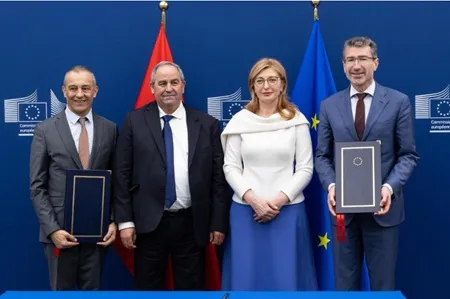
The European Union and the Kingdom of Morocco have signed an agreement extending Morocco’s participation in PRIMA, the Partnership for Research and Innovation in the Mediterranean Area, for the 2025–2027 phase, with Morocco contributing €6.6 million over this period.
Ekaterina Zaharieva, European Commissioner for Startups, Research, and Innovation, said:
“Morocco has been a committed and active partner in PRIMA from the very beginning, with its researchers playing a key role across projects in the Mediterranean. With this agreement, we will step up our cooperation to tackle shared challenges from water and agriculture to food systems and climate resilience.”
The agreement was signed by Ambassador Extraordinary and Plenipotentiary of the Kingdom of Morocco to the European Union Mr Ahmed Réda Chami and by Director-General Marc Lemaître on behalf of the European Commission, in the presence of Commissioner for Startups, Research and Innovation Ekaterina Zaharieva and H.E. Mr Azzedine El Midaoui, Minister of Higher Education, Scientific Research and Innovation of the Kingdom of Morocco.
The signature was preceded by a bilateral meeting between the Commissioner and the Minister to discuss EU–Morocco cooperation in research and innovation.
Morocco’s participation in PRIMA
Since the launch of PRIMA in 2018, the Kingdom of Morocco has been strongly engaged in the initiative. Moroccan partners have taken part in 137 of the 269 projects funded so far, addressing areas such as sustainable agriculture, integrated water management, and food value chain. These projects represent a total investment of €25.9 million, including €11.9 million from the European Commission and €13.9 million from the Kingdom of Morocco, directly supporting research institutions and innovators.
Over the years, Morocco has played an active role in regional scientific cooperation and has consistently strengthened its links with European research frameworks.
Continued participation in PRIMA will allow Moroccan researchers and institutions to access new funding opportunities, capacity-building initiatives, and international research partnerships. The agreement will also contribute to broader EU–Morocco cooperation priorities, including support for youth, the strengthening of innovation ecosystems, and the promotion of entrepreneurship.
Background
PRIMA is the largest research and innovation initiative dedicated to the Mediterranean region, supporting collaborative projects that tackle key challenges such as water scarcity, sustainable agriculture, and resilient food systems.
Through PRIMA, research institutions, universities, startups, and innovators are encouraged to collaborate across borders, promoting knowledge exchange and the development of practical solutions to shared Mediterranean challenges.
Information and image source:
Attachments:
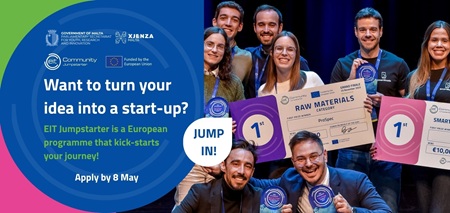
The EIT Jumpstarter 2026 Call is NOW OPEN.
The EIT just launched the EIT Jumpstarter programme for 2026- a fully-funded, award-winning pre-accelerator. Over seven months, early-stage innovators will develop essential entrepreneurial skills, validate their business cases, and gain access to mentorship and funding opportunities, including prizes of up to €10,000 💰.
🏆 For the first time, Xjenza Malta has managed to secure and collaborate on a dedicated category within the EIT Jumpstarter programme to support Maltese startups and innovators in attaining the necessary tools, skillsets and connections to refine their business concepts and take their products closer to the market. The EIT Jumpstarter is open to individuals and teams, including startups, working on innovative ideas across all research sectors - Health, Food, Raw Materials, Energy & Renewables, Manufacturing, Urban Mobility, Digital & Climate.
⏳Application deadline: 8 May 2026.
For more information visit Xjenza Malta website
Click here to read the full call text.
📅 Information Session: Join us online on 7 April at 12:30 pm to learn more about the programme, eligibility, and how to apply.
Information and image source:
Organisation:
EIT Jumpstarter
Application Deadline:
Friday, May 08, 2026
Email address:
info@eitjumpstarter.eu
Further Information:
External Link